Warren De la Rue
Warren De la Rue (born January 15, 1815, Guernsey, Channel Islands—died April 19, 1889, London, England) was an English pioneer in astronomical photography, the method by which nearly all modern astronomical observations are made.
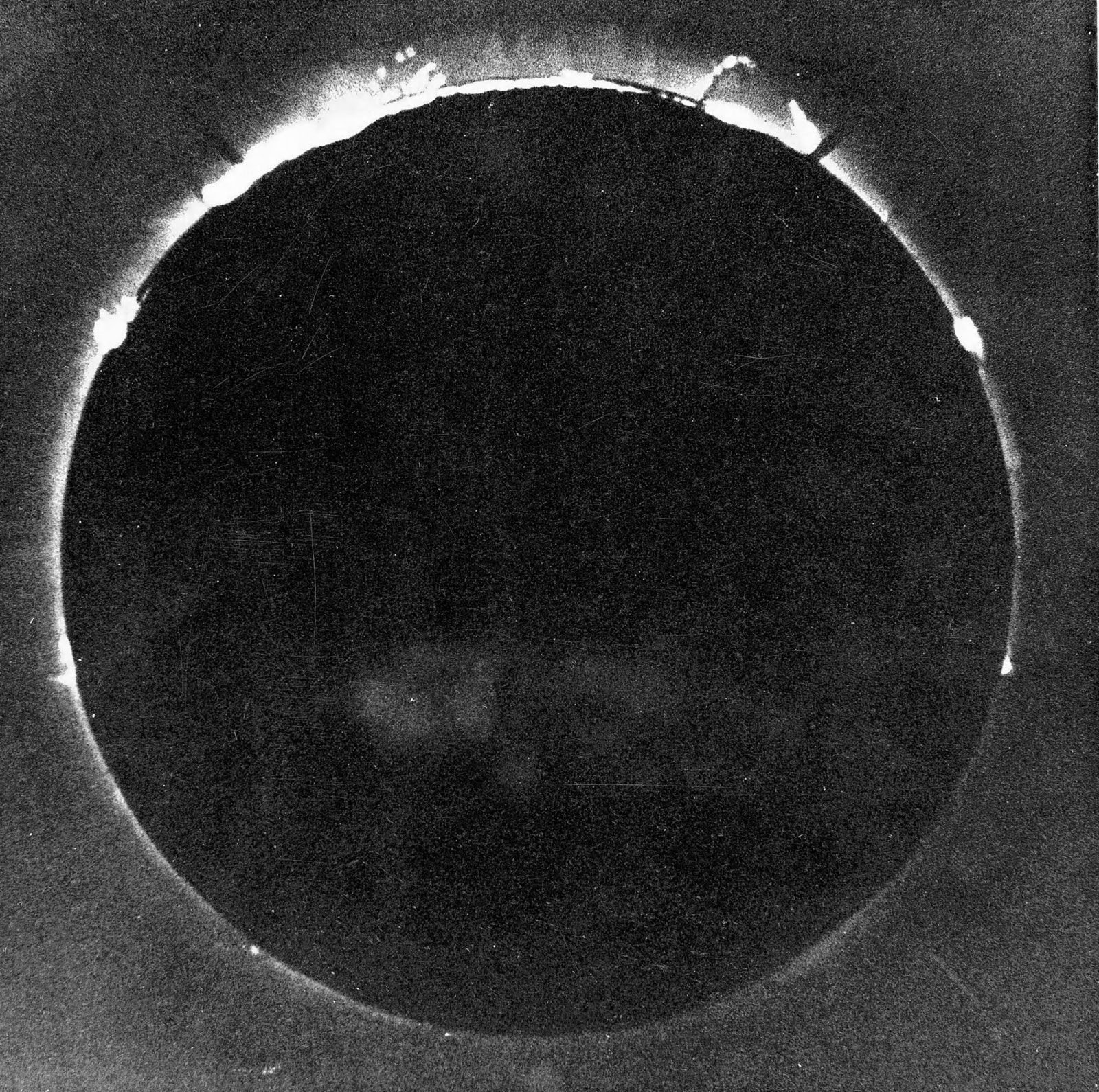
De La Rue was educated at the Collège Sainte-Barbe in Paris and entered his father’s printing business. In 1851, working with inventor Edwin Hill, he developed one of the first truly effective envelope-folding machines, which was displayed at London’s Great Exhibition of 1851. From 1852 his interest centred on the application of photography to astronomy. At Kew, Surrey, with a telescope of a special design, he carried out the proposal of the British astronomer Sir John Herschel to photograph the Sun daily. His stereoscopic pictures (formed by combining two photographs taken in succession) of the Sun and the Moon created a sensation at the International Exhibition of 1862 in London. In 1860 he directed an eclipse expedition in Spain and made observations proving that the prominences observed during total solar eclipses are connected with the Sun and not with the Moon.
De la Rue also contributed much to knowledge of chemistry and electricity, particularly through his experiments with batteries—he invented the silver chloride cell—and his studies of platinum-filament light bulbs and electrical discharge in gases.
De la Rue was elected a fellow of the Royal Society of London in 1850 and was awarded its Royal Medal in 1864. He was also a member of the Royal Astronomical Society, receiving the Gold Medal in 1862, and of the French Académie des Sciences. Among his works is Researches on Solar Physics (1865–68).