
Britannica
Sources used in this answer
Why is Mumbai an important port on the Arabian Sea?
Created from Britannica articles
using AI.
AI can make mistakes, so verify using Britannica articles.
Mumbai
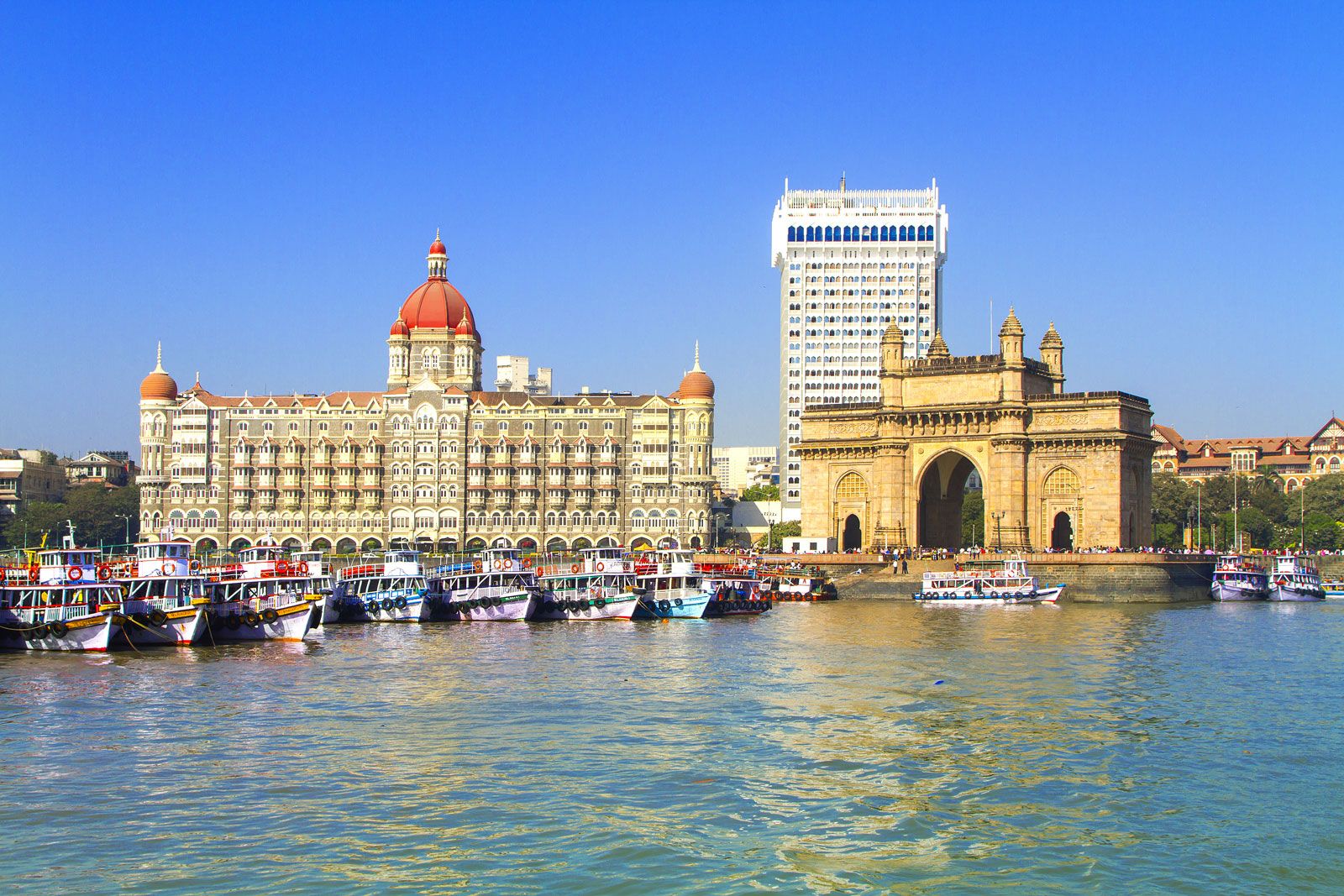
Entrance to Mumbai Harbour, marked by the Gateway of India (right foreground).
Mumbai serves as India’s principal western port on the Arabian Sea, playing a vital role in the nation's maritime trade. Its importance is derived from several key factors:12
- Strategic Capacity: The city’s harbor facilities allow it to handle a significant portion of India’s maritime trade, including containerized goods and bulk liquid cargoes. This capacity was further expanded in 1989 with the opening of a large facility in Navi Mumbai.1
- Historical Significance: Mumbai has been a center for maritime trade for centuries, dating back to at least 1000 BCE. Its growth was significantly bolstered by the opening of the Suez Canal in 1869, which facilitated easier trade connections with Europe.3
- Connectivity: As a major railhead for India's Western and Central railways, the port is seamlessly integrated into a vast network of roads and rail, allowing goods to be transported efficiently to and from all parts of the country.1
- Regional Hub: It remains one of the largest ports serving the countries bordering the Arabian Sea, functioning as a critical node in the broader Indian Ocean trade network.24