
Britannica
Sources used in this answer
Why have many people in Wallis and Futuna opposed changing the territory’s relationship with France?
Created from Britannica articles
using AI.
AI can make mistakes, so verify using Britannica articles.
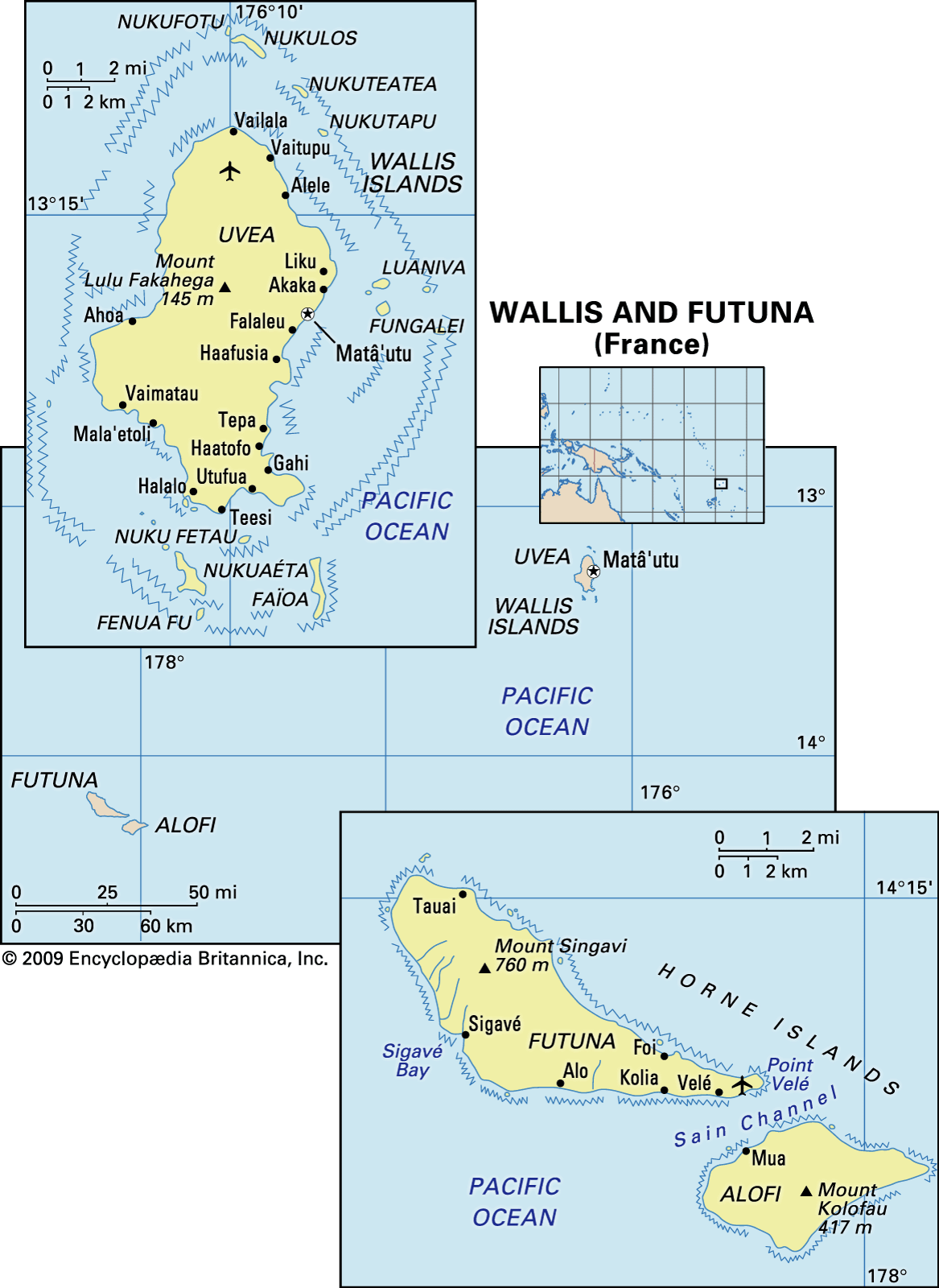
Historically, the people of Wallis and Futuna have demonstrated a conservative approach toward their political status, consistently opposing proposals to change their dependent relationship with France.1
This preference for maintaining the status quo is rooted in several factors:
- Economic Stability: The territory is resource-poor and relies heavily on French government subsidies to support its economy and infrastructure.2
- Social Services: As an integral part of France, the islands benefit from state-provided services, including tuition-free secondary education and free health services at local hospitals.3
- Traditional Governance: The islands maintain a unique political structure where traditional kingdoms—Uvea, Alo, and Sigave—coexist with the French administration. This arrangement allows the local population to preserve traditional leadership roles while benefiting from the security and financial support of the French state.314
While there have been internal discussions regarding the territory's future, particularly concerning the status of expatriates in New Caledonia, the population has generally favored the stability provided by their current status as a French overseas collectivity.1