
Britannica
Sources used in this answer
Why has the population of the German state of Saxony declined since the mid-20th century?
Created from Britannica articles
using AI.
AI can make mistakes, so verify using Britannica articles.
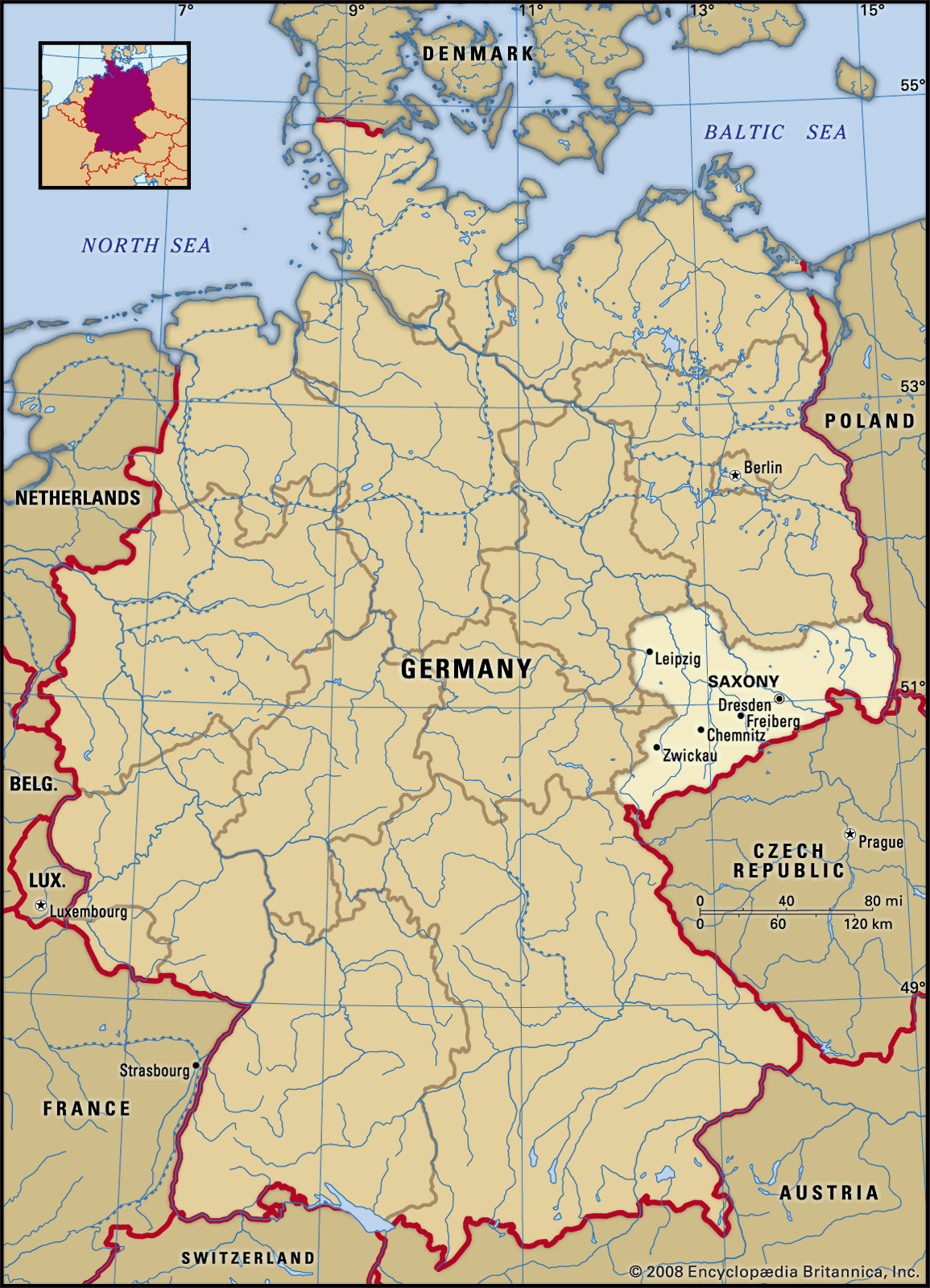
The population of Saxony has experienced a significant decline since the mid-20th century, with the number of inhabitants falling by one-fifth between 1960 and the turn of the 21st century.1
This demographic shift is largely attributed to several interconnected factors:
- Migration and Brain Drain: Following German reunification, the region faced severe economic challenges, including the wholesale shutdown of state-run factories and high unemployment. This led to a wave of migration as tens of thousands of people left eastern Germany for the west or abroad in search of better opportunities, resulting in a significant "brain drain".12
- Historical Demographic Disparities: The population structure in eastern Germany was further impacted by the departure of younger citizens both before the construction of the Berlin Wall and following its destruction in 1989, which left behind a disproportionately elderly population.3
- Economic Transition: The transition from a state-controlled economy to a free-market system caused widespread industrial disruption, particularly in sectors like textile production and lignite mining, which had previously been major sources of employment.12