
Why does permafrost cover much of the Brooks Range and the North Slope?
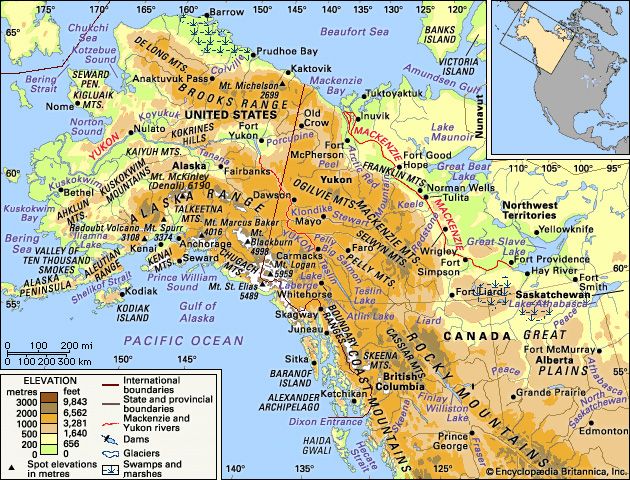
Permafrost, which is defined as ground that remains at or below 0 °C (32 °F) for two or more years, covers much of the Brooks Range and the North Slope primarily due to the region's climate.
Permafrost forms and persists in environments where the mean annual air temperature is 0 °C or colder, a condition characteristic of the Arctic and subarctic regions. In these areas, long, cold winters with little snow and short, cool summers prevent the ground from thawing completely, allowing the subsurface layers to remain continuously frozen.12
While the surface layer—known as the active layer—thaws during the summer, the ground beneath it stays frozen. The thickness of this permafrost can be influenced by local factors, such as the thermal conductivity of the underlying rock and the geothermal gradient. In northern Alaska, these cold climatic conditions are sufficiently severe to maintain permafrost that can reach significant depths.1234