
Why do the coastal mountains of southeastern Alaska receive much more precipitation than the Brooks Range?
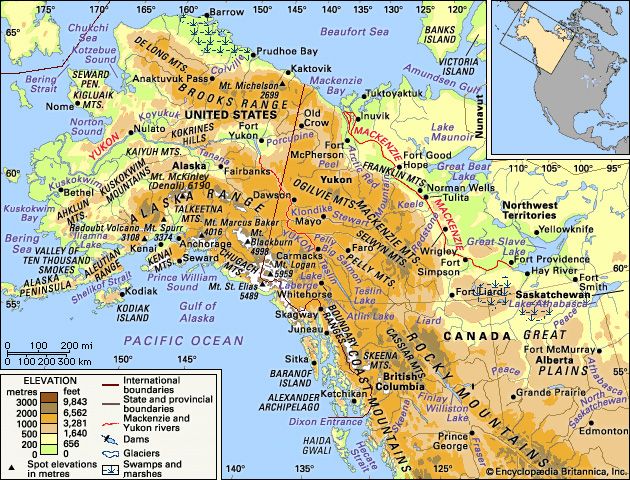
The coastal mountains of southeastern Alaska receive significantly more precipitation than the Brooks Range due to their distinct climatic zones and the influence of ocean currents.1
The coastal mountains lie within a maritime zone, where the climate is heavily influenced by the warm waters of the Kuroshio (Japan Current) and the Alaska Current. These warm oceanic waters contribute to frequent and intense storm systems that move inland from the Gulf of Alaska. As this moist air encounters the coastal mountain ranges, it is forced upward, resulting in heavy orographic precipitation—a process where rising air cools and releases moisture. Consequently, these areas can receive 200 to 300 inches of precipitation annually.1234
In contrast, the Brooks Range is located in the Arctic zone and is characterized by a semiarid, continental climate. It lacks the moderating, moisture-rich influence of warm Pacific currents, making it the driest of the Alaskan ranges with less than 20 inches of annual precipitation.13