
Britannica
Sources used in this answer
Why did shorter jhum cycles reduce farm productivity in Mizoram?
Created from Britannica articles
using AI.
AI can make mistakes, so verify using Britannica articles.
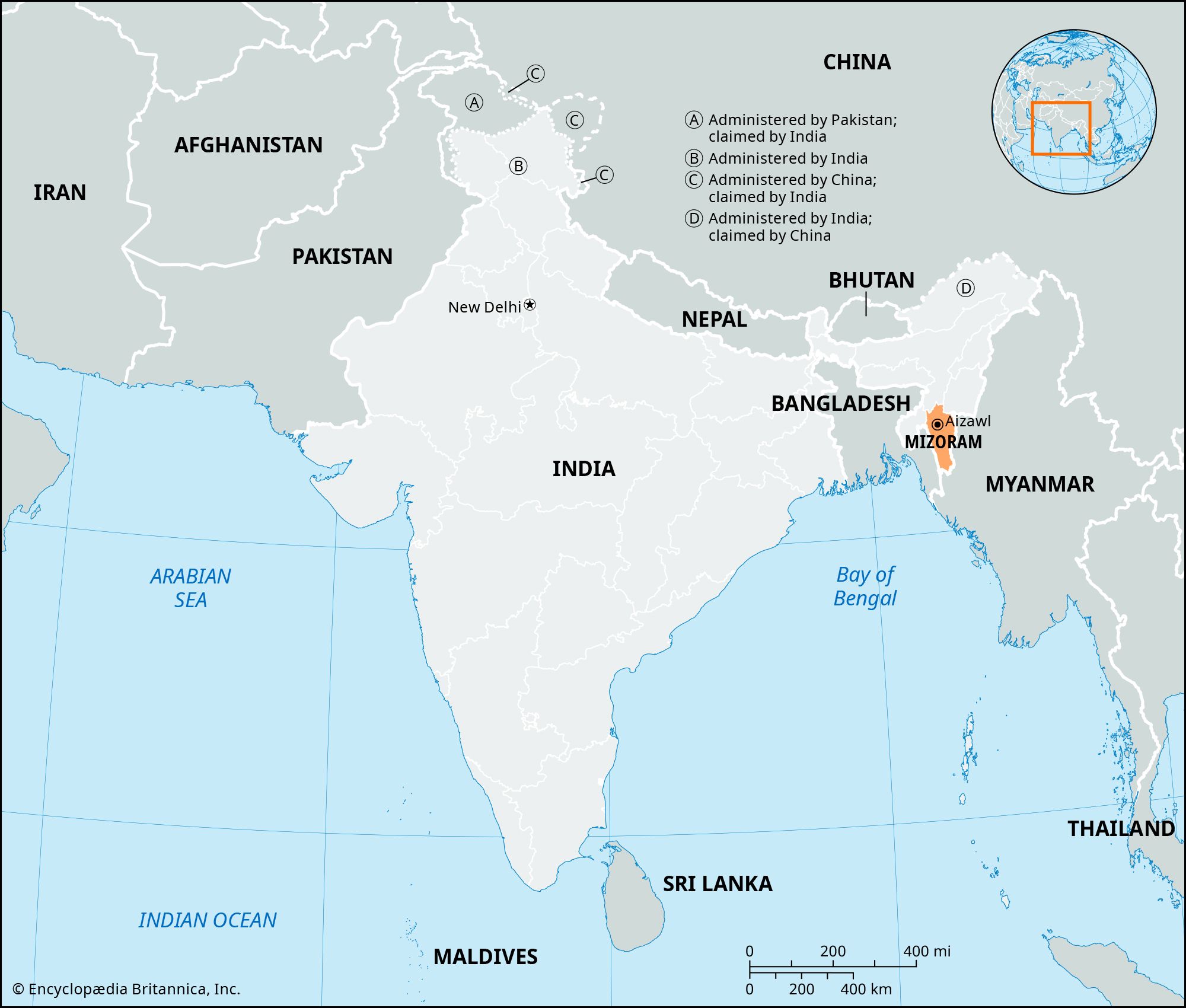
Mizoram
Mizoram, India.
In Mizoram, the reduction of jhum (shifting agriculture) cycles led to decreased farm productivity because the land was not given sufficient time to recover.
Traditionally, jhum cultivation relies on a fallow period—historically about eight years—that allows the soil to regenerate its nutrients and natural vegetation before the next cycle of planting begins. However, as the number of people farming increased during the 20th century, the pressure on land forced a reduction in this regeneration cycle. By shortening the fallow period, the soil was unable to fully restore its fertility, which directly resulted in lower agricultural yields.1