
Britannica
Sources used in this answer
Which minerals were historically mined in Saxony’s Ore Mountains?
Created from Britannica articles
using AI.
AI can make mistakes, so verify using Britannica articles.
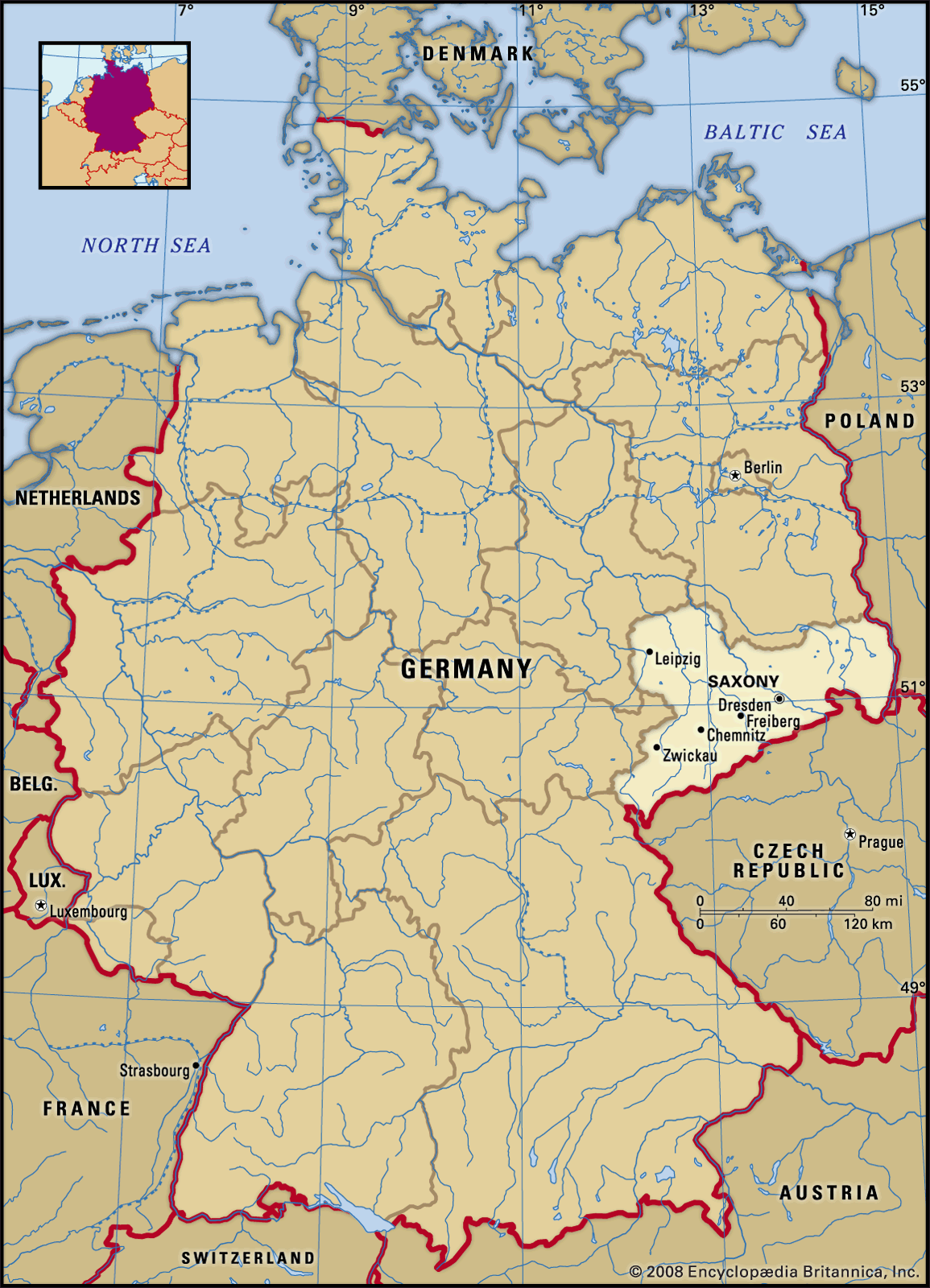
The Ore Mountains (Erzgebirge), which stretch along the southern border of Saxony, have a long and storied tradition of mining that historically defined the region's economy and settlement patterns.12
Throughout the centuries, miners in the Ore Mountains extracted a variety of valuable resources, including:
- Gold and Silver: The region was famously known for its precious metal deposits, with Freiberg serving as an influential silver-mining center as early as the 12th century.13
- Base Metals: Lead, copper, and tungsten (wolfram) were also significant products of the local mining industry.1
- Uranium: Following World War II, the region saw the development of uranium deposits, particularly around Aue and Annaberg-Buchholz, though this production has since ceased.124
While these historical mining activities were central to the development of the Ore Mountains, most of these operations have closed over time. Today, lignite remains the only major industrial resource still mined in significant quantities within Saxony, primarily in the Lusatia and Central German fields.2