
Britannica
Sources used in this answer
How does the intertropical convergence zone affect rainfall in Central Africa?
Created from Britannica articles
using AI.
AI can make mistakes, so verify using Britannica articles.
Central Africa
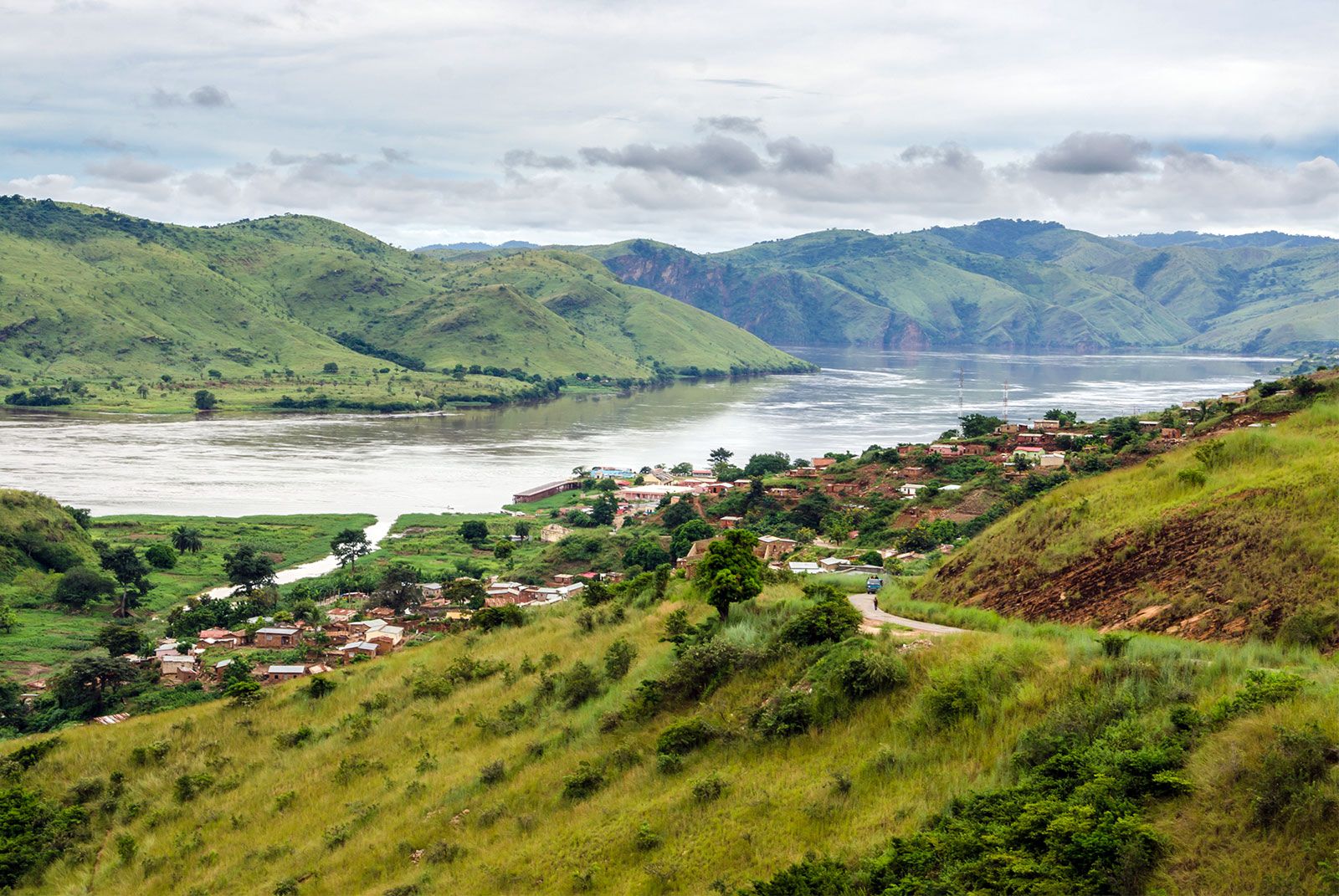
A small village in the hills along the banks of the Congo River, Democratic Republic of Congo, Central Africa.
The intertropical convergence zone (ITCZ) is a primary determinant of the climate in Central Africa, acting as a belt where trade winds from the Northern and Southern hemispheres converge and force unstable tropical air aloft. As this air rises, it cools and condenses, resulting in intense, prolonged, and heavy precipitation.123
The ITCZ moves seasonally, following the Sun, which dictates the rainfall patterns across the region:312
- Equatorial Strip: This area is influenced by the ITCZ throughout the year, leading to high humidity and heavy rainfall with no significant dry season. Because the ITCZ crosses this zone twice annually—moving northward and southward—the region experiences two rainfall maxima.41
- North and South of the Equator: As the ITCZ shifts away from the equatorial strip, the dry season increases in severity with latitude. In the Northern Hemisphere, the region is driest in January when it receives dry Saharan air masses, while the Southern Hemisphere experiences its driest period in July.41
While the ITCZ is a major climatic control, local factors such as elevation, proximity to the Atlantic Ocean, and cold marine currents like the Benguela Current also influence regional rainfall patterns.41