
Britannica
Sources used in this answer
How does permafrost affect construction in the Mackenzie River delta?
Created from Britannica articles
using AI.
AI can make mistakes, so verify using Britannica articles.
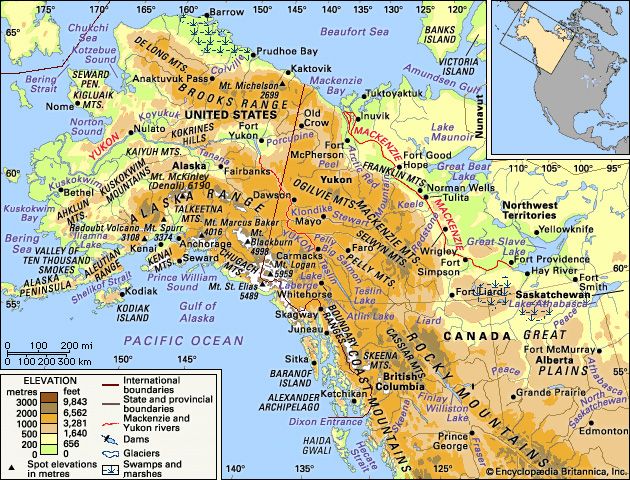
In the Mackenzie River delta, the presence of permafrost a few feet beneath the surface necessitates specific adaptations for construction to ensure structural stability. Because the ground can lose its bearing strength or change in volume when the ice-rich soil thaws, engineers must carefully manage the thermal environment of their projects.12
Common construction practices in the region include:
- Elevated Foundations: Houses and other buildings are typically placed on wooden piles that are sunk and frozen into the permafrost to provide a stable foundation.1
- Infrastructure Adaptation: To protect utility lines from the effects of the frozen ground, towns like Inuvik utilize a "utilidor"—a raised, boxlike metal container that houses sewer, water, and heating pipes above the surface.1
- Engineering Planning: Construction of roads, airfields, and pipelines must be adapted to the discontinuous permafrost conditions found throughout the Mackenzie Lowlands.1
Generally, the goal of northern engineering is to disturb the permafrost as little as possible to maintain a stable foundation, often employing the "passive method" of construction to preserve the frozen state of the ground.3