
Britannica
Sources used in this answer
How does miombo forest differ from equatorial rainforest?
Created from Britannica articles
using AI.
AI can make mistakes, so verify using Britannica articles.
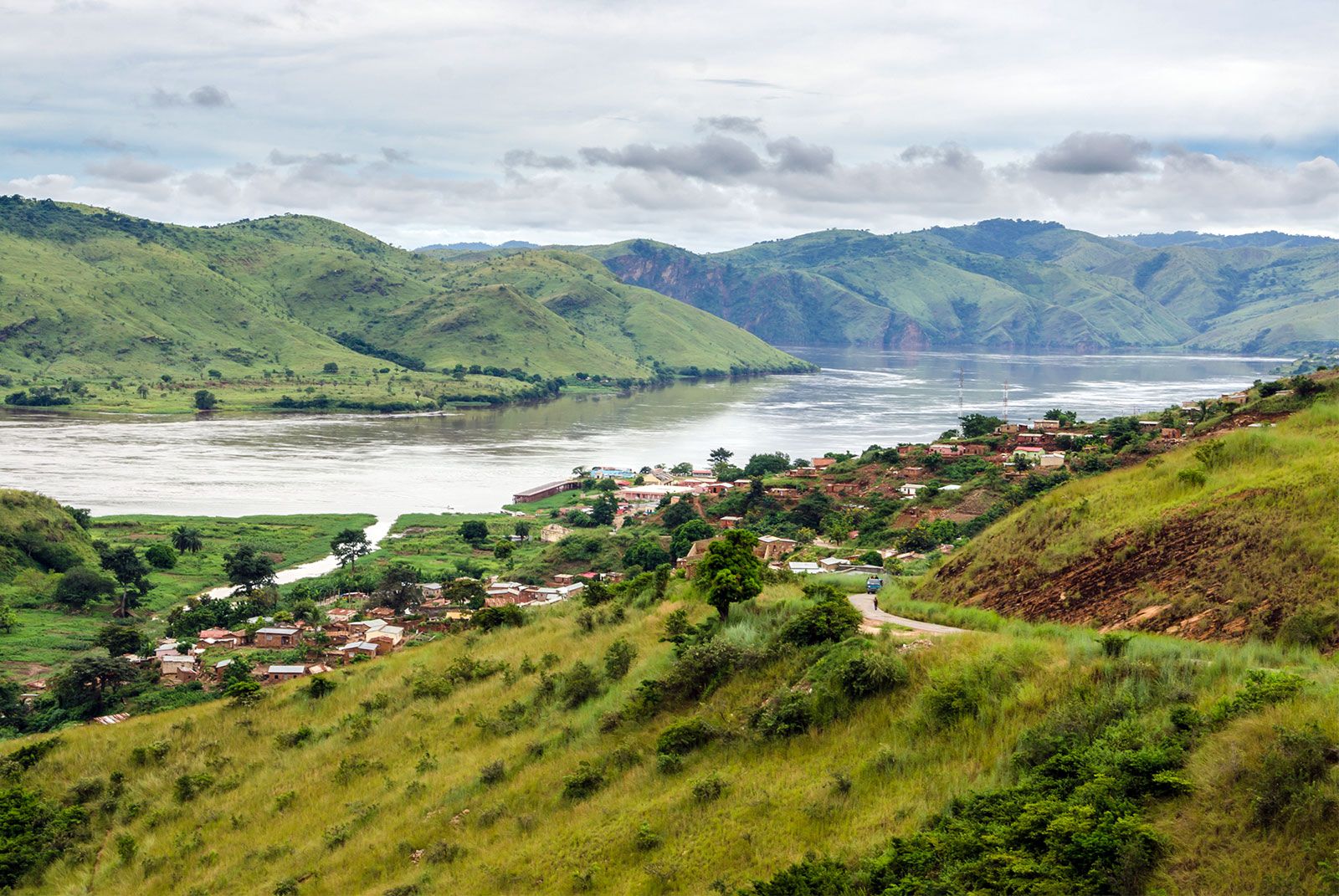
Central Africa
A small village in the hills along the banks of the Congo River, Democratic Republic of Congo, Central Africa.
The primary differences between equatorial rainforests and miombo forests in Central Africa are rooted in their climatic requirements and structural characteristics.
Equatorial Rainforest
- Climate: These forests thrive in equatorial regions where temperatures remain consistently high and rainfall is heavy and evenly distributed throughout the year, with no significant dry season.123
- Structure: They are characterized by dense, evergreen vegetation that is structurally complex, featuring high trees, lianas, and epiphytes. The canopy is thick, creating a distinct microclimate that moderates temperature and wind speed.23
- Composition: These forests often harbor a vast variety of species, sometimes numbering in the hundreds per acre.2
Miombo Forest
- Climate: Known as a dry tropical forest, the miombo is found in regions with more pronounced seasonal variations, specifically experiencing a distinct dry season.23
- Structure: The trees in miombo forests are smaller and less dense than those found in the equatorial rainforest.2
- Adaptation: A defining feature of the miombo is that its trees are deciduous, meaning they shed their leaves during the dry season to survive the period of lower rainfall.2
While equatorial rainforests dominate the central depression of the Congo basin, miombo forests are typically found in the southeast, such as on the plateaus of Katanga.12