
How do mountain snowmelt and summer rainfall affect the Mackenzie River’s flow?
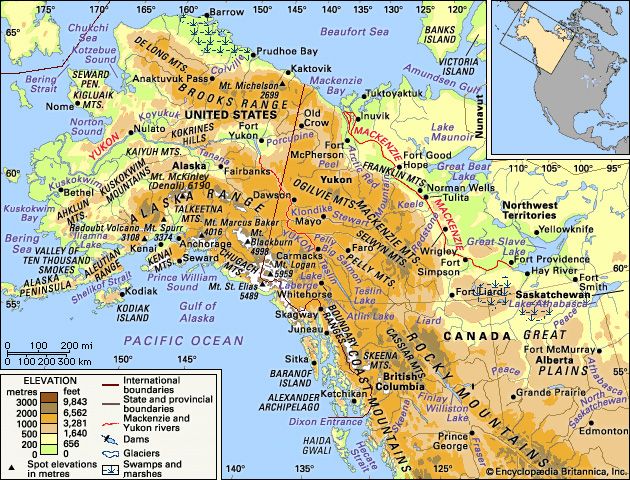
Mountain snowmelt and summer rainfall play significant roles in the flow of the Mackenzie River. Tributary rivers that drain from the Mackenzie Mountains experience peak flows in June, driven by the melting of mountain snow. This influx contributes to the river's high-water period, which typically lasts from May to October.12
In contrast, summer rainfall has a relatively minor impact on the river's volume. The Mackenzie River valley receives limited precipitation, with average summer rainfall recorded at only about 7 to 8 inches (175 to 200 mm). Because of this low precipitation, the river picks up relatively little volume from within its own valley lowland. Consequently, while snowmelt from the mountains is a primary driver of seasonal peak flows, the river becomes shallower in late summer as these mountain-fed tributaries recede.1