
Britannica
Sources used in this answer
How did the defeat of the Marathas affect Bombay's trade and growth?
Created from Britannica articles
using AI.
AI can make mistakes, so verify using Britannica articles.
Mumbai
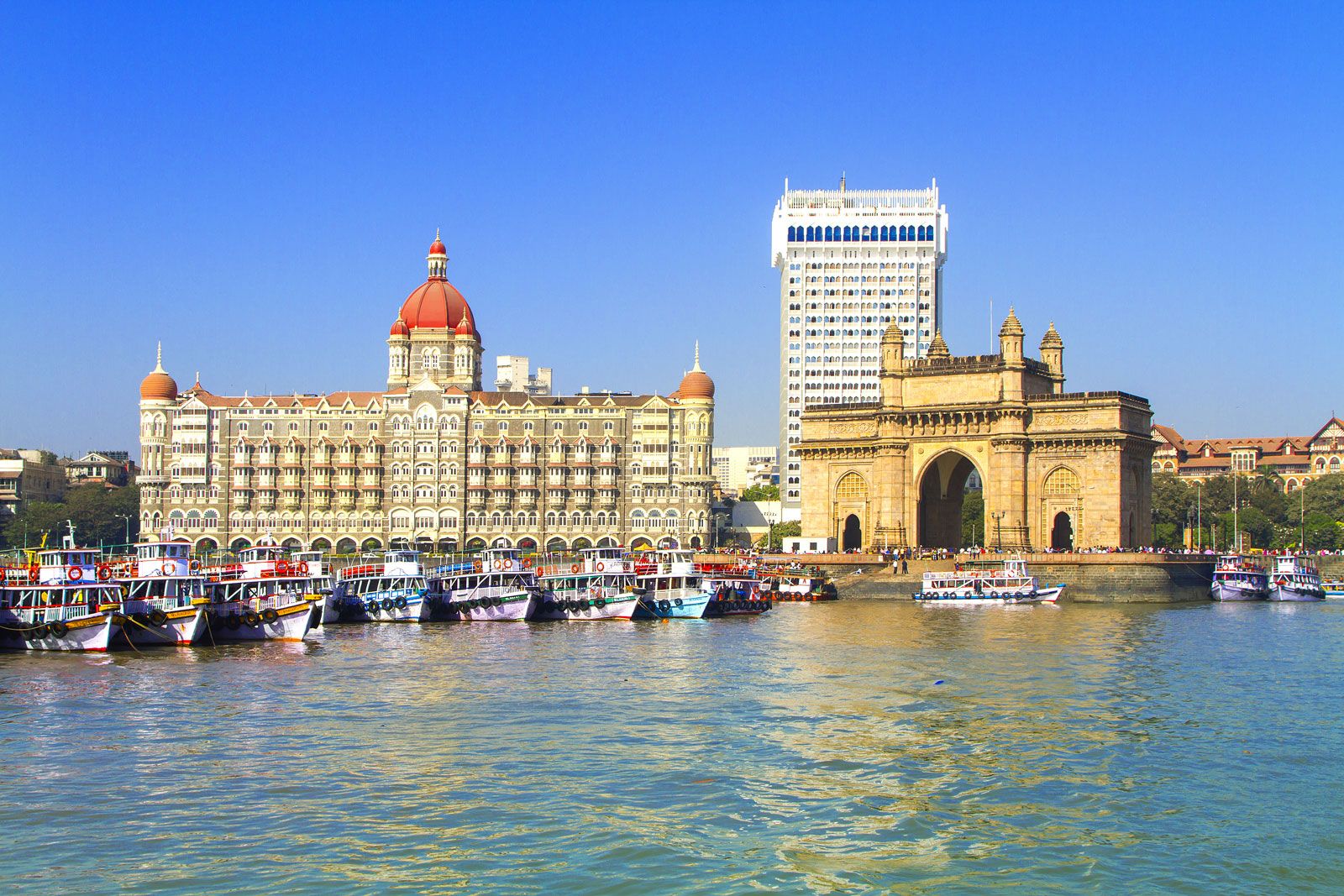
Entrance to Mumbai Harbour, marked by the Gateway of India (right foreground).
The defeat of the Marathas was a pivotal factor in the transformation and prosperity of Bombay (now Mumbai). Prior to this, the city’s trade was limited because the Marathas controlled the surrounding hinterland, leaving the British with only a tenuous foothold on the west coast.12
Following the destruction of Maratha power, the geopolitical landscape shifted significantly, which directly benefited the city's growth in the following ways:
- Access to the Hinterland: The end of Maratha dominance allowed for the establishment of secure trade and communication routes to the mainland, which had previously been restricted.2
- Economic Expansion: With the hinterland opened, Bombay evolved into a strong center for import trade. This development laid the groundwork for the city to become a major commercial hub, eventually leading to its status as the largest cotton market in India by 1860.2
- Integration of Markets: The removal of regional political barriers facilitated the extension of existing connections to Europe, further integrating Bombay into broader international trade networks.2
Ultimately, the collapse of Maratha power removed the primary local obstacle to British expansion in the region, enabling Bombay to transition from a minor trading outpost into a thriving colonial center.2