
Britannica
Sources used in this answer
How did folding, faulting, and uplift form the Brooks Range?
Created from Britannica articles
using AI.
AI can make mistakes, so verify using Britannica articles.
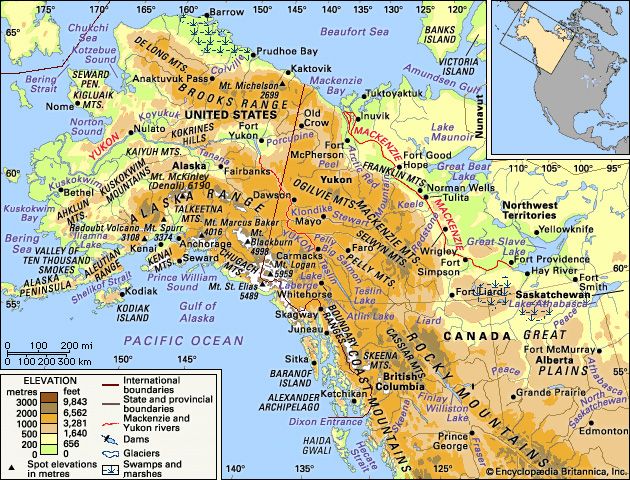
The Brooks Range was formed through a series of major compressional foldings, known as orogenies, that began in the late Jurassic Period (approximately 201 to 145 million years ago).1
The mountain-building process involved several key geological mechanisms:
- Folding and Faulting: The range is characterized by significant folding, faulting, and major overthrusting toward the north. These processes deformed the sedimentary and metamorphic rocks that form the backbone of the range.1
- Uplift: Following the initial orogenies, the mountains experienced periodic, incremental uplift throughout the Cretaceous Period and into the Paleogene and Neogene periods. This process of elevation was completed by strong deformation and uplift during the late Neogene.1
- Erosion: Throughout these tectonic events, the landscape was simultaneously shaped by the erosive forces of rivers and glaciers, which helped carve the range's rugged topography.1
Today, the Brooks Range remains the highest mountain system within the Arctic Circle, serving as a major drainage divide in northern Alaska.21