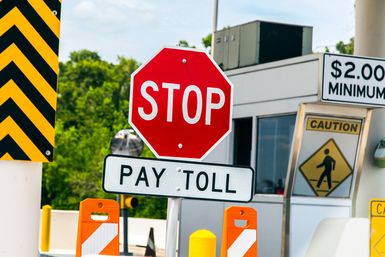
Investing in local infrastructure.
© travelview/stock.adobe.com
Suppose you’d like to help improve things in your local community. Maybe you want to help stimulate your town’s economic development. Or maybe you have something more specific in mind, like funding school programs, fixing roads, or improving community facilities like public libraries and parks. What if you could put your money toward these projects and not only get your principal back, but also enjoy some steady, tax-free income along the way? If any of these ideas resonate with you, then investing in municipal bonds may be worth considering.
Key Points
- Municipal bonds allow you to support local community projects while earning tax-free income.
- Munis are safe, but they do come with risks you should understand.
- Munis can provide both financial returns and pride in supporting local projects.
What are municipal bonds?
Municipal bonds, or “munis” for short, are essentially loans that you give to your local government (like your city or town) to help it pay for public projects such as roads, bridges, and buildings. In return for the use of your money, your local government promises to pay you interest regularly and give back your principal after a specified time. Plus, in most cases, your gains aren’t taxed by the federal government.
How is a muni bond issued?
Muni bonds are issued by your local city, county, and state governments. They are debt securities that have varying maturity dates (that is, when the government will pay you back). Short-term maturities tend to last one to three years, while longer-term maturities typically last no more than a decade.
Each bond notes several terms, including the maturity date, coupon rate (the interest the bond issuer will pay you), price, tax status, redemption terms, credit rating, and more.
Principal and interest? Coupons? Par value? What does it all mean?
The bond market, believe it or not, is pretty straightforward once you get through all the jargon. Learn all about how the bond market works.
What are the benefits of investing in muni bonds?
Munis can provide tax-free income at the federal level and may be exempt from state and local taxes as well. This can be particularly attractive to investors with high incomes.
Munis are relatively safe. As one of the safer investments out there, munis are often considered safe havens. Municipal bond rates tend to be low, and most are backed by the “full faith and credit” of the local government issuing the bonds.
Munis provide diversification. They can help smooth out the volatility and risk in your stock portfolio.
Munis allow you to invest directly in your community. Depending on the project, you might be able to see your money at work as it improves your local infrastructure.
Are there different types of muni bonds?
There are two common types of munis:
- General obligation (GO) bonds are backed by the full faith and credit of the issuer. In other words, these bonds aren’t backed by assets. But because the issuer can tax local residents to pay its bondholders, GO bonds tend to be viewed as safer. This also means that yields tend to be lower than revenue bonds.
- Revenue bonds are backed by a revenue stream that’s often tied to the project being funded. For example, toll roads and water treatment facilities are public works that collect revenue from user fees. These bonds offer higher yields than GO bonds because they carry more risk. If revenues dry up, the issuer won’t be able to pay you back.
Do muni bonds carry risk?
Yes, they do. It’s true that munis have a reputation for being among the safer investments available, and they are. But that doesn’t mean there are no risks at all. Some primary risks to consider are:
- Credit risk. If your local government gets into dire financial straits, it may be unable to pay back your principal. This is rare, but it has happened. And if you’re investing in revenue bonds, remember that revenue always runs the risk of falling.
- Interest rate risk. Every bond you buy has a market price, also known as its “face value.” A bond’s price can decline. If you hold on to your bond until maturity, you’ll likely get the full amount you put in. But if you sell your bond before maturity and its price has fallen below what you paid, then you’ll lose money.
- Call risk. If interest rates fall, your local government may repay your bond before the maturity date. The issuer will likely refinance the debt at a lower interest rate. There goes your interest income—but at least you get your principal back.
- Inflation risk. In this scenario, you might be holding a long-term bond while inflation eats away at the amount you’re making on interest payments. Depending on how bad inflation gets, it effectively shrinks your gains.
- Liquidity risk. Illiquid bonds are those that are hard to sell. Maybe you want to get rid of your bonds because the issuer is in financial hardship, or because revenues tied to your revenue bond are on the downswing. You want to sell your bonds, but it’s difficult to find anyone who wants to buy them. Maybe there are a few buyers offering a price far below what you paid (meaning, you lose money). That’s liquidity risk.
The bottom line
If you’re interested in a safe investment that not only provides tax-free income but also the satisfaction of helping to support construction projects in your local community, then munis might be the right kind of asset to diversify your broader portfolio. Just make sure you’re aware of the bond terms and any risks they might pose before you purchase.
This article is intended for educational purposes only and not as an endorsement of a particular financial strategy. Encyclopædia Britannica, Inc., does not provide legal, tax, or investment advice. Please consult your legal or tax advisor before proceeding.
This article was most recently revised and updated by Karl MontevirgenThis article was most recently revised and updated by Doug Ashburn