Encyclopaedia Britannica's editors oversee subject areas in which they have extensive knowledge, whether from years of experience gained by working on that content or via study for an advanced degree. They write new content and verify and edit content received from contributors.
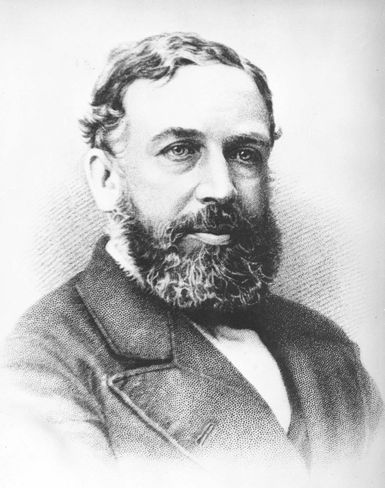
William Stanley Jevons was an English logician and economist whose book The Theory of Political Economy (1871) expounded the “final” (marginal) utility theory of value. Jevons’s work, along with similar discoveries made by Karl Menger in Vienna (1871) and by Léon Walras in Switzerland (1874), marked the opening of a new period in the history of economic thought.
Jevons broke off his studies of the natural sciences at University College, London, in 1854 to take a post as assayer in Sydney, Australia. There he became interested in political economy and social studies. After his return to England in 1859, he completed two of his most original and seminal papers. The first, “General Mathematical Theory of Political Economy” (1862), outlined what came to be known as the marginal utility theory of value. This theory suggests that the utility or value to a consumer of an additional unit of a product is (at least beyond some critical quantity) inversely related to the number of units of that product he already owns. The second, “A Serious Fall in the Value of Gold” (1863), attempted to measure the rise in prices in the period following the gold discoveries in California and Australia. This work represents one of the greatest contributions to the theory of index numbers ever published. Yet it was not until the publication of The Coal Question (1865), in which Jevons called attention to the gradual exhaustion of Britain’s coal supplies, that he received public recognition. He feared that as the supply of coal was exhausted, its price would rise. That conclusion was wrong, however, because it failed to account for improvements in the technology used to extract coal.
In 1866 Jevons was appointed to a chair of political economy at Owens College, Manchester. He moved to University College in 1876. Of his works on logic and scientific methods, the most important is his Principles of Science (1874). His other notable works include The Theory of Political Economy (1871) and The State in Relation to Labour (1882).