Second Sino-Japanese War: Quick Facts

Answers created from Britannica articles using AI. AI can make mistakes, so verify using Britannica articles.

What was the Second Sino-Japanese War?

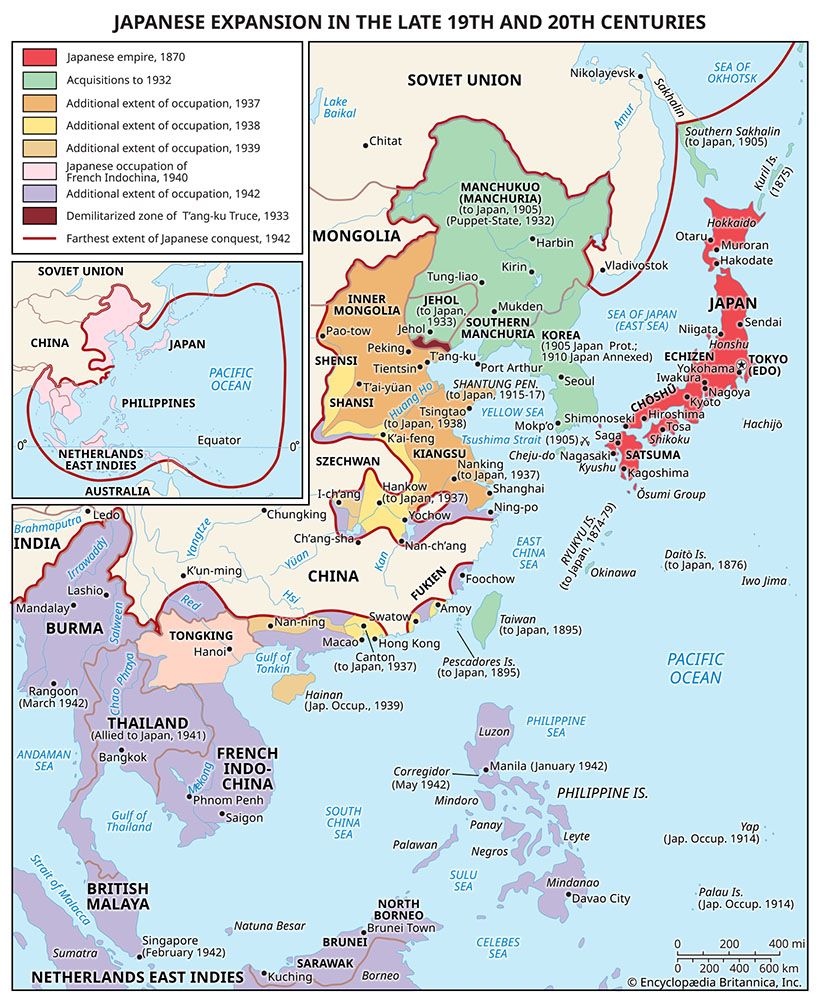
The Second Sino-Japanese War, which began on July 7, 1937, was a major conflict between China and Japan. It originated from Japan's expansionist policies in China, including the consolidation of boundary areas to enlarge its economic sphere and the establishment of the puppet state of Manchukuo. The war escalated after Japanese troops engaged Chinese units at the Marco Polo Bridge near Beijing. Despite spirited Chinese resistance, Japanese armies captured key cities like Nanking and Hankow. The conflict continued until Japan's surrender in World War II in 1945.
When did the Second Sino-Japanese War take place and which countries were involved?

The Second Sino-Japanese War took place from July 7, 1937, to September 9, 1945. This conflict was primarily between China and the Empire of Japan. While the main belligerents were China and Japan, other countries became involved as the war progressed and merged into World War II. The Soviet Union provided support to China, and eventually, the United States and other Allied nations joined the fight against Japan.

Why did the war begin between China and Japan in 1937?

The Second Sino-Japanese War began on July 7, 1937, following the Marco Polo Bridge Incident. This conflict erupted between Chinese and Japanese troops near Beijing and escalated into full-scale warfare.

Japan had previously occupied Manchuria in 1931 and continued to expand its influence into northern China. This aggression fueled a strong anti-Japanese sentiment in China, leading to a united front between the Chinese communists and nationalists against further Japanese expansion. The incident at the Marco Polo Bridge, where shots were exchanged between Chinese and Japanese soldiers, marked the beginning of the war, as China refused to make concessions and the conflict rapidly spread.

What were some major battles or events during the Second Sino-Japanese War?

The Second Sino-Japanese War, beginning in 1937, saw significant events and battles. The conflict escalated after the Marco Polo Bridge Incident near Beijing, leading to Japanese advances and the capture of major cities like Shanghai and Nanjing. The Nanjing Massacre, a brutal event involving mass killings and rapes by Japanese troops, occurred from December 1937 to January 1938. Despite initial Japanese victories and control over key northern cities and railways, China's determination to resist, bolstered by Soviet support, prolonged the war. The Chinese government eventually relocated its capital to Chongqing.

How did the Second Sino-Japanese War impact the lives of people in China and Japan?

The Second Sino-Japanese War (1937-1945) profoundly impacted both China and Japan. In China, the conflict led to immense loss of life, widespread destruction, and displacement of populations. Cities were bombed, and atrocities like the Nanjing Massacre resulted in hundreds of thousands of civilian deaths and rapes. The war also saw the rapid growth of communist influence in areas behind Japanese lines, as they organized populations and implemented reforms.

In Japan, the war effort strained the economy and society. While Japanese armies achieved initial successes, the prolonged conflict led to a stalemate and significant casualties. The war's demands contributed to the eventual defeat of Japan in World War II, followed by Allied occupation and a period of significant social and economic restructuring.

How did the Second Sino-Japanese War connect to World War II and what was its outcome?

The Second Sino-Japanese War, beginning in 1937, became a crucial part of World War II after Japan's attack on Pearl Harbor in 1941. Initially, Japan sought to expand its influence in China, establishing the puppet state of Manchukuo in 1932. Overt hostilities escalated after the Marco Polo Bridge incident in July 1937, leading to significant Japanese territorial gains, including Shanghai and Nanking. Despite brutal atrocities, Chinese resistance, supported by both Nationalist and Communist forces, prolonged the conflict. The war ended with Japan's surrender in 1945, marking a significant turning point in East Asian history and contributing to the eventual Allied victory in World War II.

Second Sino-Japanese War Read the full article Second Sino-Japanese War Second Sino-Japanese War, (1937–45), conflict that broke out when China began a full-scale resistance to the expansion of Japanese influence in its territory (which had begun in 1931). The war, which remained undeclared until December 9, 1941, may be divided into three phases: a period of rapidread more

The Second Sino-Japanese War was a military conflict fought between China and Japan from 1937 to 1945. Hostilities escalated into full-scale war on July 7, 1937, after Chinese and Japanese forces clashed at the Marco Polo Bridge near Beijing. Following Japan's attack on Pearl Harbor in December 1941, the conflict merged into World War II, concluding with Japan's surrender in 1945.

Facts

Also Known As War of Resistance Against Japanese Aggression
Date 1937 - 1945
Location Hebei • Manchuria • Pacific Ocean
Participants China • Japan • Allied powers
Context United Front • Manchukuo

Did You Know?

  • During the Second Sino-Japanese War, Chinese forces breached Yellow River dikes in June 1938 to halt advancing Japanese troops, causing massive flooding.

Photos and Videos


Topics

Key People

Chiang Kai-shek
Chiang Kai-shek
Chinese soldier and statesman
Konoe Fumimaro.
Konoe Fumimaro
prime minister of Japan
default image
Zhu De
Chinese military leader
Claire L. Chennault.
Claire L. Chennault
United States major general
Chen Yi
Chen Yi
Chinese military leader
Stilwell, Joseph W.
Joseph W. Stilwell
United States general
default image
Ye Ting
Chinese military leader
default image
Norman Bethune
Canadian surgeon and political activist