
How did the 2011 tsunami damage farms and low-lying land in northeastern Japan?
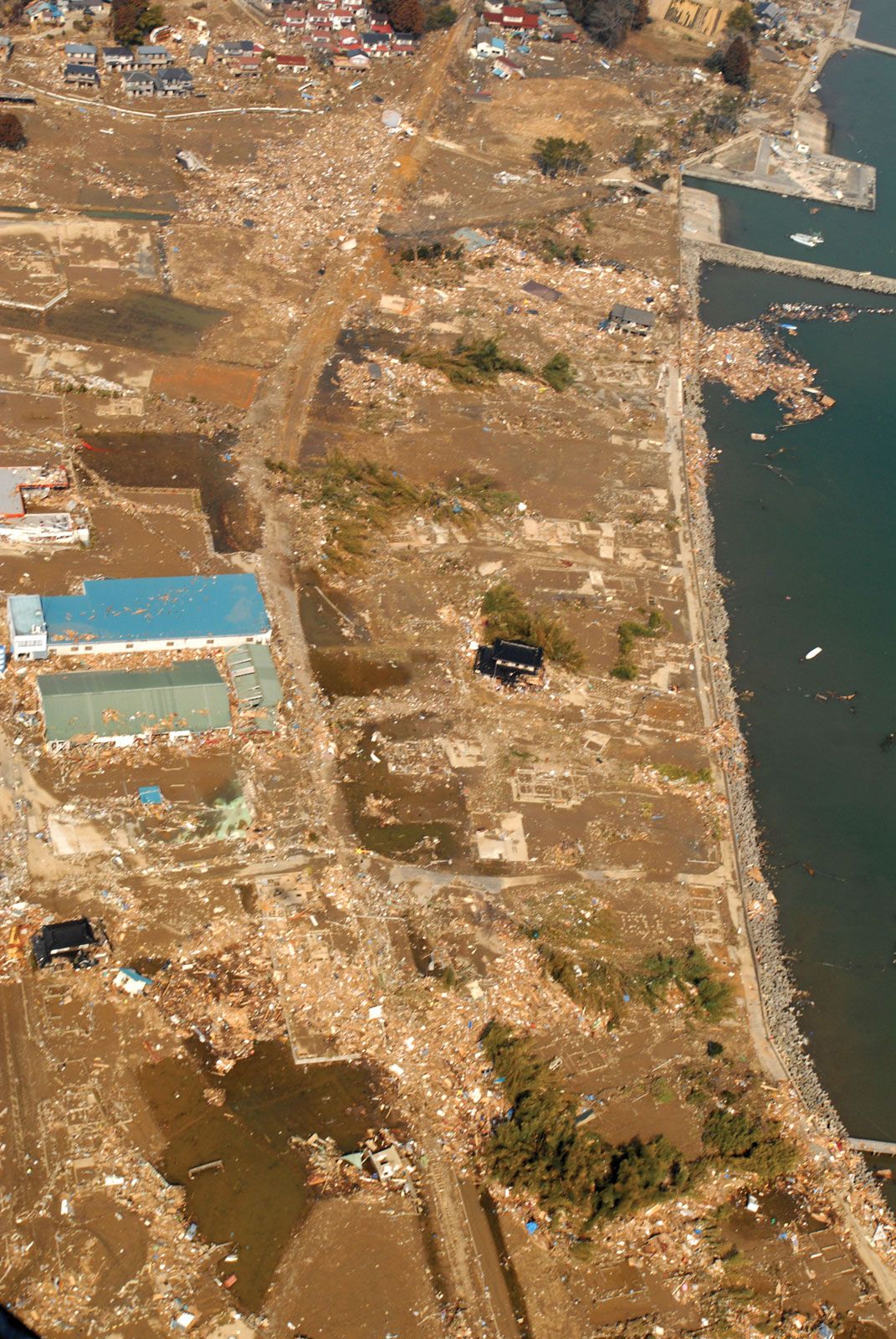
The 2011 tsunami caused extensive damage to farms and low-lying land in northeastern Japan by inundating vast areas with seawater and debris. As the tsunami waves moved inland—in some instances penetrating up to 6 miles (10 km)—they flooded the countryside and left large stretches of land submerged under seawater.12
The disaster destroyed infrastructure and swept away enormous quantities of houses, vehicles, and other debris, which were deposited across the landscape as the floodwaters retreated. In the aftermath, many areas were left covered by thick layers of mud and wreckage, rendering the land unusable and requiring massive cleanup efforts to remove the debris. The widespread saltwater inundation and physical destruction of the terrain significantly impacted the region's agricultural capacity, necessitating long-term reconstruction and the relocation of many sites to higher ground.123