
How did Japan organize rescue and relief efforts after the March 2011 disaster?
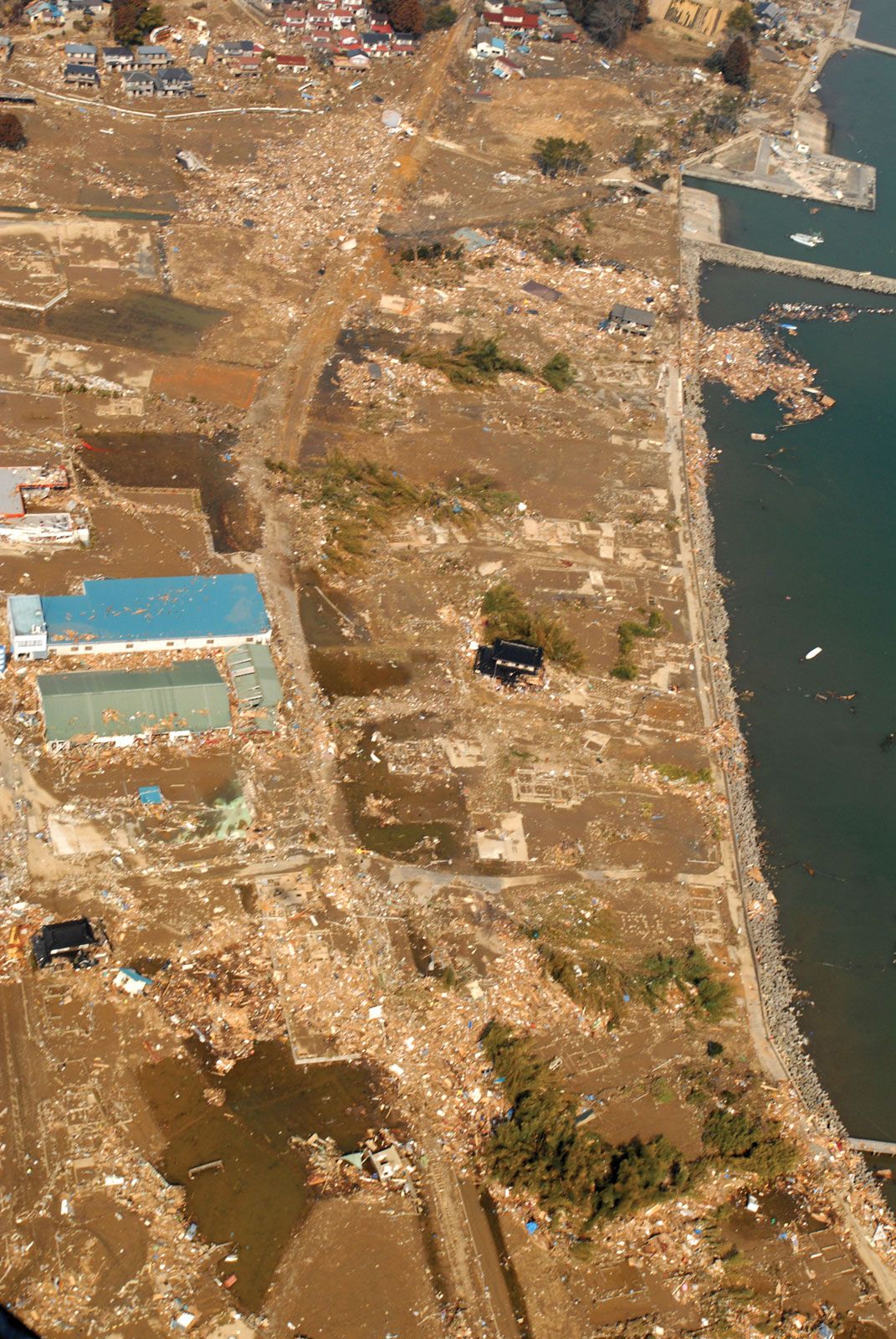
Following the March 2011 disaster, Japan initiated a massive, multi-layered response to manage the crisis and facilitate long-term recovery.
Immediate Rescue and Relief
In the hours following the earthquake, Prime Minister Kan Naoto established an emergency command center in Tokyo. The government mobilized approximately 100,000 members of the Japanese Self-Defense Force to conduct search-and-rescue operations. International cooperation was also vital; the Japanese government requested assistance from U.S. military personnel, and numerous nations—including Australia, India, and South Korea—deployed search-and-rescue teams. Global organizations like the Red Cross and Red Crescent provided essential material and financial support.1
Reconstruction and Coordination
To manage the long-term recovery, the government passed three disaster-related supplemental budgets, with the largest providing $155 billion for reconstruction. In February 2012, the government established a cabinet-level Reconstruction Agency to coordinate rebuilding efforts in the Tōhoku region over a projected 10-year period. This agency oversaw the removal of disaster debris and the construction of new coastal infrastructure, such as seawalls, and the development of higher-ground housing sites.1