
Why did Archimedes say that his mechanical method was not a complete mathematical proof?
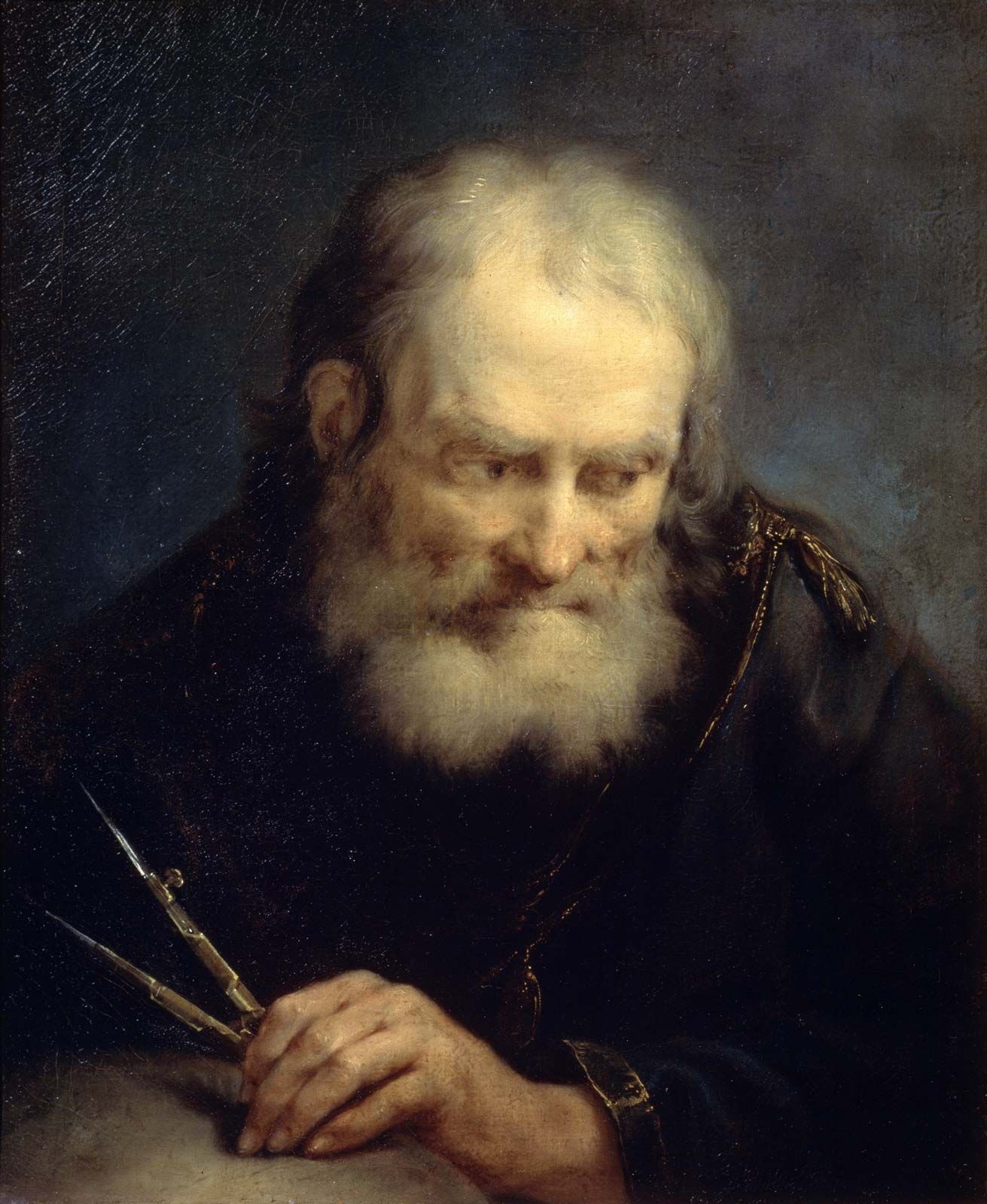
Archimedes considered his mechanical method a heuristic device rather than a rigorous mathematical proof because it relied on physical reasoning—specifically, the concept of "weighing" infinitesimally thin strips of figures against each other on a notional balance to determine their ratios.12
While this approach was highly effective for discovering new theorems, such as those concerning the area of a parabolic segment or the volume of a sphere, it did not meet the stringent standards of geometric proof required in his time. To achieve mathematical rigor, Archimedes followed his mechanical discoveries by providing formal proofs using the method of exhaustion, a technique of successive finite approximation established by Eudoxus of Cnidus. By distinguishing between the intuitive, mechanical process of discovery and the formal, deductive process of verification, Archimedes ensured his work maintained the highest level of mathematical integrity.23