
How did Archimedes use infinite geometric series in the Quadrature of the Parabola?
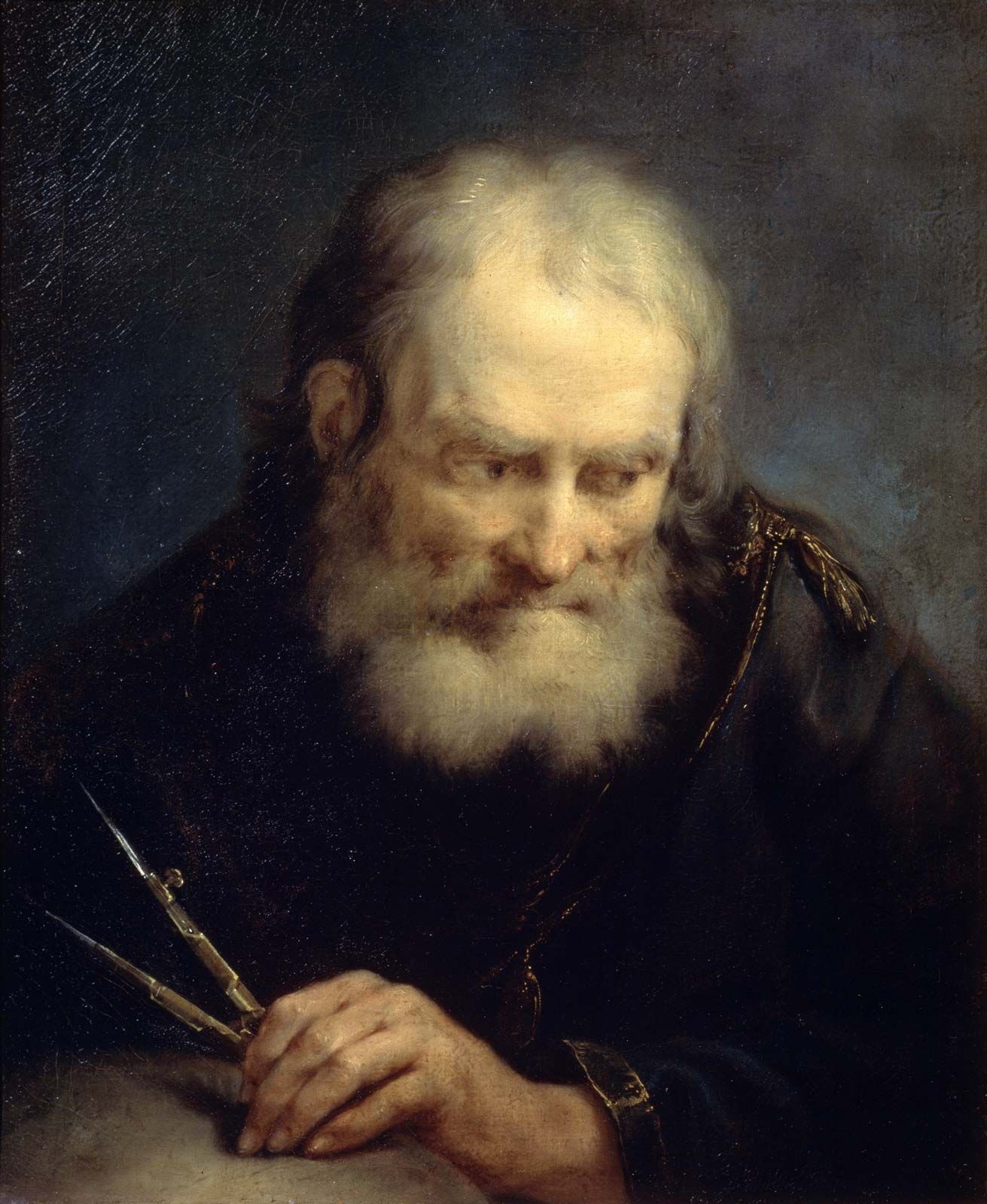
In the Quadrature of the Parabola, Archimedes did not explicitly use the modern concept of an infinite geometric series, as ancient Greek mathematicians generally avoided the notion of actual infinity. Instead, he employed the method of exhaustion, a rigorous geometric technique developed by Eudoxus of Cnidus to calculate areas and volumes by successive finite approximations.123
To determine the area of a parabolic segment, Archimedes inscribed a triangle within the segment, then inscribed smaller triangles within the remaining areas, and continued this process indefinitely. By summing the areas of these triangles, he demonstrated that the total area of the parabolic segment is exactly the area of the initial inscribed triangle.2
While this process effectively mirrors the summation of a geometric series—specifically —Archimedes achieved this result through geometric proofs rather than algebraic series expansion. His work is considered a precursor to integral calculus, showcasing his ability to solve complex problems of integration using finite, rigorous methods that avoided the then-controversial concept of infinity.23