
How did Archimedes estimate the value of pi?
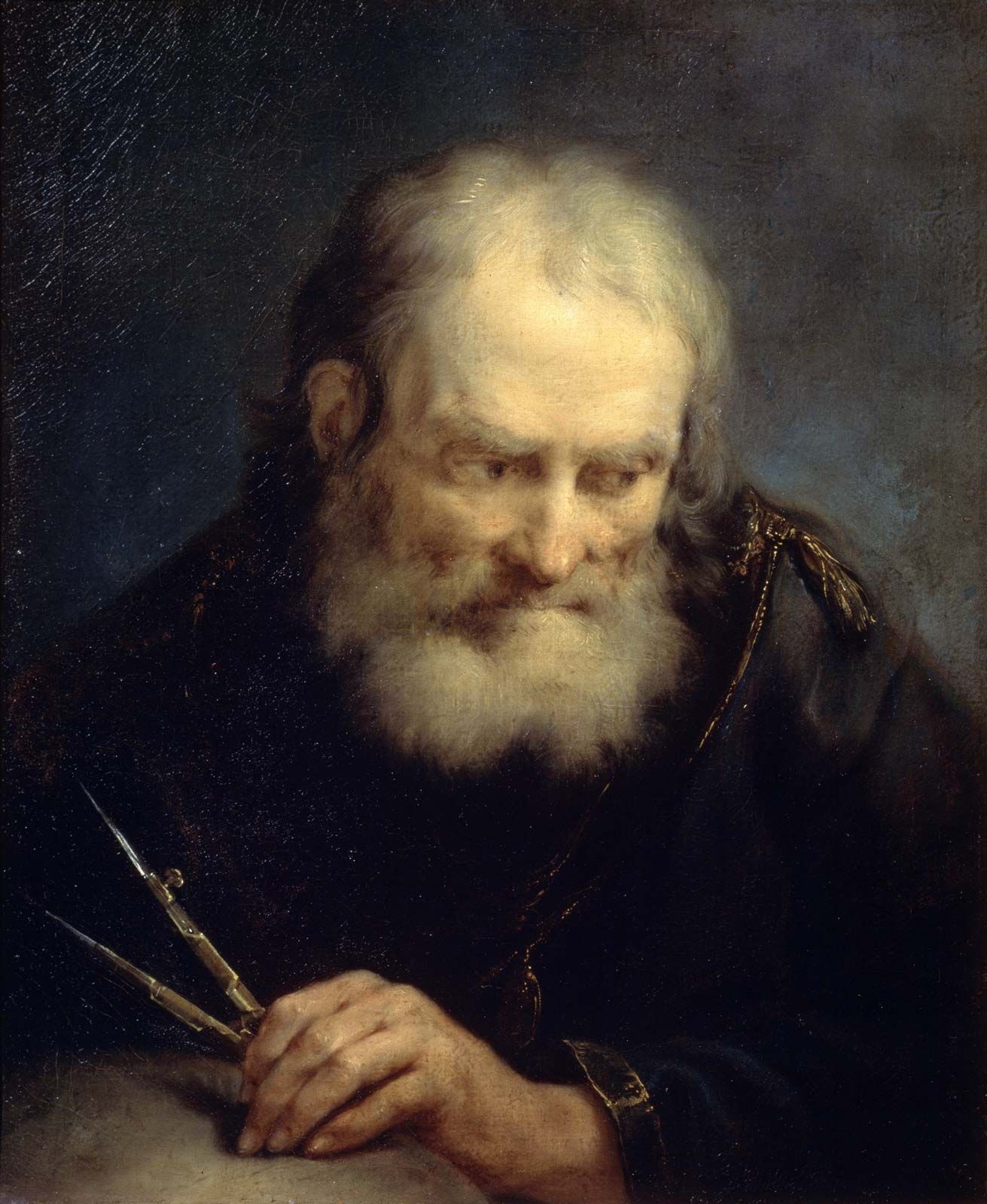
In the 3rd century BCE, the Greek mathematician Archimedes estimated the value of pi using a geometric approach known as the method of exhaustion.12
Rather than relying on simple approximation, Archimedes calculated the perimeters of regular polygons both inscribed within and circumscribed around a circle. By increasing the number of sides of these polygons up to 96, he was able to establish precise upper and lower bounds for the value of pi. Through this rigorous method, he proved that the ratio of a circle's circumference to its diameter lies between 3 10/71 and 3 1/7 (approximately 3.1418).12
In addition to this estimation, Archimedes proved that the area of a circle is equal to that of a triangle with a height equal to the circle's radius and a base equal to its circumference, further demonstrating his profound contributions to classical geometry.2