
Why is the stacco a massello method less intrusive than the strappo technique?
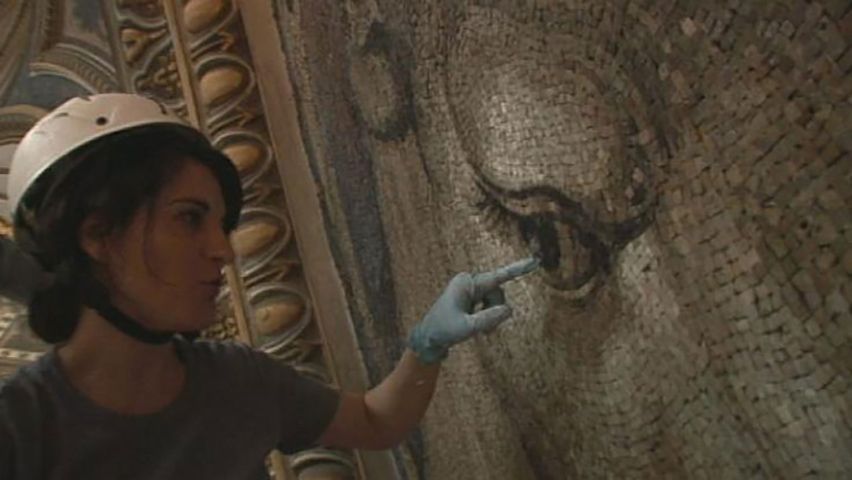
In the field of art conservation and restoration, the stacco a massello method is considered less intrusive than the strappo technique because it preserves the painting with its entire original substrate intact.1
The strappo technique is a radical procedure that involves gluing canvas to the fresco surface and pulling away only a thin layer of plaster containing the pigment particles. This process often irreversibly alters the original surface character and pigment density of the work.1
In contrast, stacco a massello removes the wall painting along with its complete original support. By maintaining the integrity of the original substrate, this method avoids the destructive thinning of the pictorial layer associated with strappo. While stacco a massello is the least intrusive option for the fresco itself, it is a more challenging and complex procedure due to the significant mass and weight of the removed section, requiring careful bracing to prevent mechanical damage such as vibration or torque.1