
Britannica
Sources used in this answer
Why can poor-quality paper cause artworks to deteriorate even in careful storage?
Created from Britannica articles
using AI.
AI can make mistakes, so verify using Britannica articles.
Art conservation and restoration
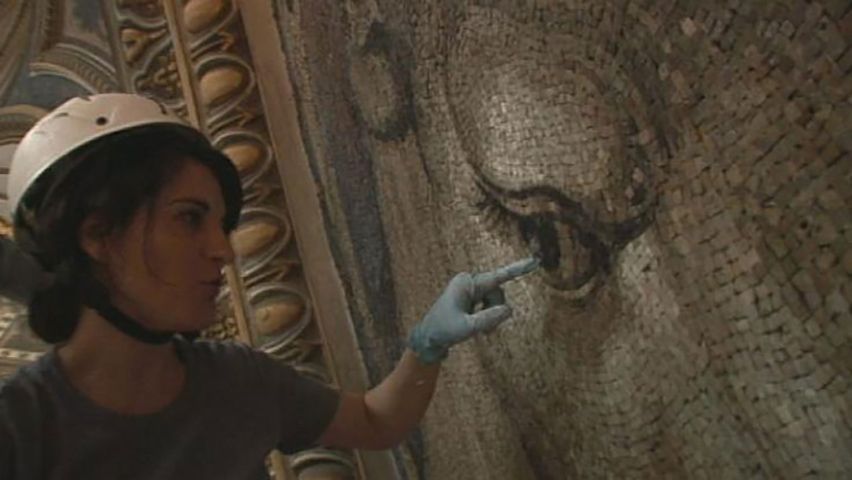
Learn about the restoration of tiles in St. Peter's Basilica, Vatican City.
Poor-quality paper often contains wood pulp, which can lead to a phenomenon known as "inherent vice"—a condition where the materials themselves are chemically unstable and prone to inevitable deterioration regardless of storage conditions.1
The primary reasons for this degradation include:
- Acidity: Many inferior papers are acidic, which causes the material to break down over time. This acidity can also migrate to other parts of an artwork through contact with poor-quality framing materials or back mattes, a process that accelerates damage.12
- Chemical Instability: Papers containing wood pulp often retain lignin, a complex organic polymer that contributes to the structural integrity of plants but is not removed during the manufacturing of lower-grade paper. Over time, these components can undergo chemical changes that lead to darkening and brittleness.31
- Biological Vulnerability: The cellulose and sizing (binding agents) in paper can be susceptible to attack by biological pests such as mold, fungus, silverfish, and book lice, especially if storage environments are not strictly controlled.12
To mitigate these risks, conservators emphasize the use of acid-free, archival-quality materials, such as 100 percent rag content paper, for all storage and framing needs.12