
Britannica
Sources used in this answer
What is efflorescence and how does it harm wall paintings?
Created from Britannica articles
using AI.
AI can make mistakes, so verify using Britannica articles.
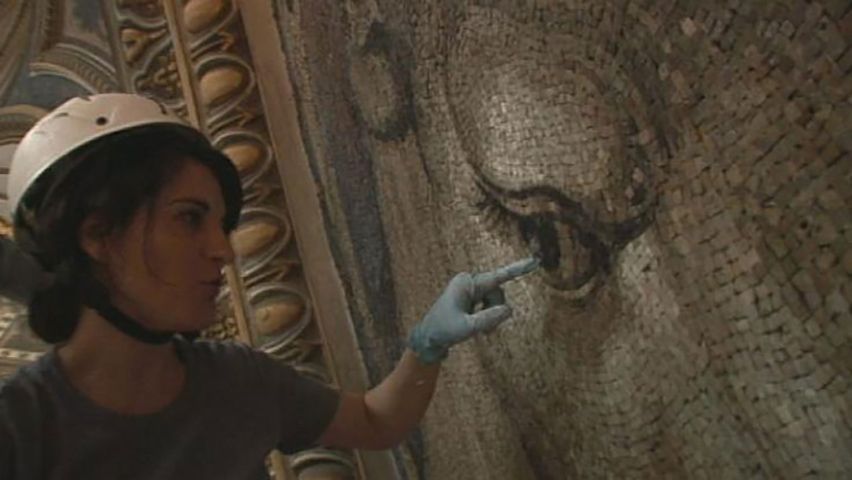
Art conservation and restoration
Learn about the restoration of tiles in St. Peter's Basilica, Vatican City.
In the context of art conservation, efflorescence refers to the formation of salt crystals on or within a porous material, such as the plaster or stone supports of wall paintings. This process occurs when moisture carrying soluble salts evaporates at the surface of the painting.12
How Efflorescence Harms Wall Paintings
Efflorescence is a significant hazard to the integrity of wall paintings, causing damage through the following mechanisms:
- Physical Stress and Disintegration: As salts crystallize, they occupy a greater volume than they did in their dissolved state. When this crystallization occurs within the pores of the wall fabric (a process sometimes called subefflorescence), it exerts enormous pressure on the pore walls, leading to the fracturing, flaking, or spalling of the paint layers and the underlying support.12
- Surface Obfuscation: When salts crystallize directly on the surface, they form a white, powdery deposit often described as a "salty veil." This can obscure the painted image and create an unsightly appearance.12
- Layer Delamination: The accumulation of these crystals can cause the paint layers to lose their bond with the wall, resulting in delamination.1
- Secondary Damage: The presence of salts can perpetuate a cycle of decay by increasing the material's capacity to absorb moisture, which may further encourage biological growth like mold and mildew.12
Conservators must manage these issues carefully, often by controlling environmental moisture and using specialized techniques like poulticing to extract salts without damaging the original artwork.12