
Britannica
Sources used in this answer
What causes paint to flake or lift from the surface of a canvas painting?
Created from Britannica articles
using AI.
AI can make mistakes, so verify using Britannica articles.
Art conservation and restoration
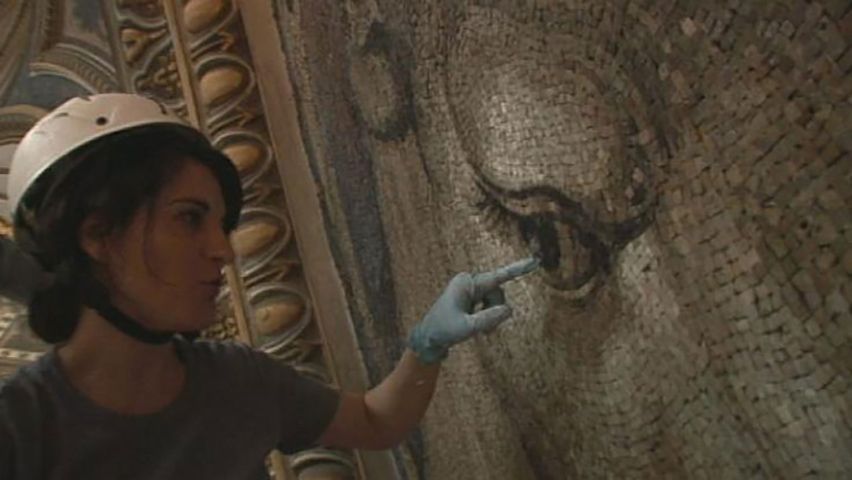
Learn about the restoration of tiles in St. Peter's Basilica, Vatican City.
Paint flaking or lifting from a canvas—a condition often referred to as cleavage, blistering, or scaling—is primarily caused by the physical response of the painting materials to their environment and the aging process.1
Key factors contributing to this deterioration include:
- Environmental Fluctuations: Canvas supports expand and contract in response to variations in relative humidity. Because the paint and ground layers may not move at the same rate as the canvas, these dimensional changes can cause the paint to lose its adhesion to the surface.1
- Aging and Deterioration: Over time, the canvas support itself may deteriorate due to age and acidic conditions, weakening the foundation for the paint layers.1
- Faulty Technique: If an artist uses improper techniques, such as applying layers that dry at different rates, it can lead to unequal shrinkage and subsequent cracking or flaking.1
- Loss of Adhesion: The ground—the layer between the support and the paint—may lose its adhesion to either the canvas or the paint layers, or it may fracture internally, resulting in the paint lifting away.1
It is essential to address these issues with care, as improper past restorations or environmental neglect can exacerbate the damage.1