
Britannica
Sources used in this answer
How does the strappo technique remove a fresco from a wall?
Created from Britannica articles
using AI.
AI can make mistakes, so verify using Britannica articles.
Art conservation and restoration
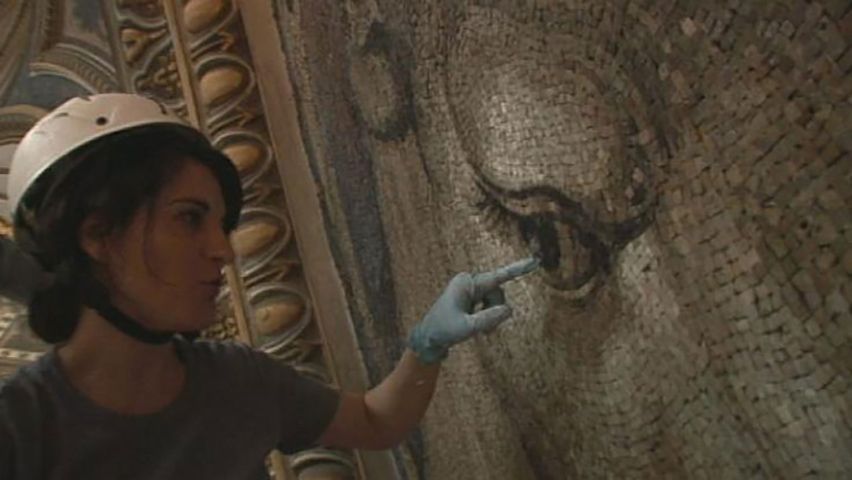
Learn about the restoration of tiles in St. Peter's Basilica, Vatican City.
The strappo technique is a radical method used in art conservation and restoration to remove a fresco from a wall when it is threatened by severe decay.
The process involves the following steps:
- Facing: A canvas is glued firmly to the surface of the fresco. The bond between this canvas and the painting must be stronger than the internal cohesion of the plaster itself.
- Extraction: The canvas is pulled and eased away from the wall, removing a thin layer of plaster that contains the fresco's pigment particles.
- Refining: Excess plaster is removed from the back of the extracted layer, revealing the thinned fresco in reverse.
- Mounting: The thinned pictorial layer is recoated on the reverse with materials that simulate the original plaster and is then fixed to a new, rigid support.
Because this procedure can irreversibly alter the original surface character and pigment density of the artwork, it is now used only sparingly. Conservators generally prefer to perform treatments in situ to preserve the site-specific integrity of the painting within its architectural context.1