
Britannica
Sources used in this answer
How does buon fresco bind pigments to damp plaster?
Created from Britannica articles
using AI.
AI can make mistakes, so verify using Britannica articles.
Art conservation and restoration
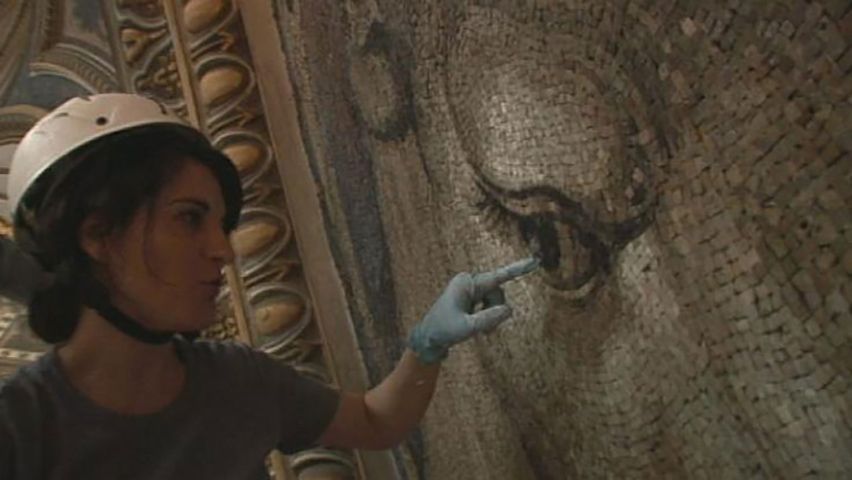
Learn about the restoration of tiles in St. Peter's Basilica, Vatican City.
In buon fresco, pigments are bound to the wall through a chemical process that occurs as the plaster dries.1
The process works as follows:
- Preparation: The artist applies pigments mixed only with water onto a freshly prepared, damp layer of lime plaster, known as the intonaco.12
- Chemical Reaction: Because the plaster is prepared with slaked lime, it is saturated with an aqueous solution of hydrate of lime. As this plaster soaks into the paint, it absorbs carbonic acid from the air.2
- Binding: This reaction produces calcium carbonate, which acts as a permanent binder. As the wall sets, the pigment particles crystallize within the plaster, effectively becoming an integral part of the wall surface rather than a separate layer.123
This method creates a highly durable finish, as the colors are physically cemented along with the sand particles of the plaster. Because the pigments are fused into the wall, the resulting painting is exceptionally resistant to aging.3