
Britannica
Sources used in this answer
How can ultraviolet light infrared imaging and X-rays help detect art forgeries?
Created from Britannica articles
using AI.
AI can make mistakes, so verify using Britannica articles.
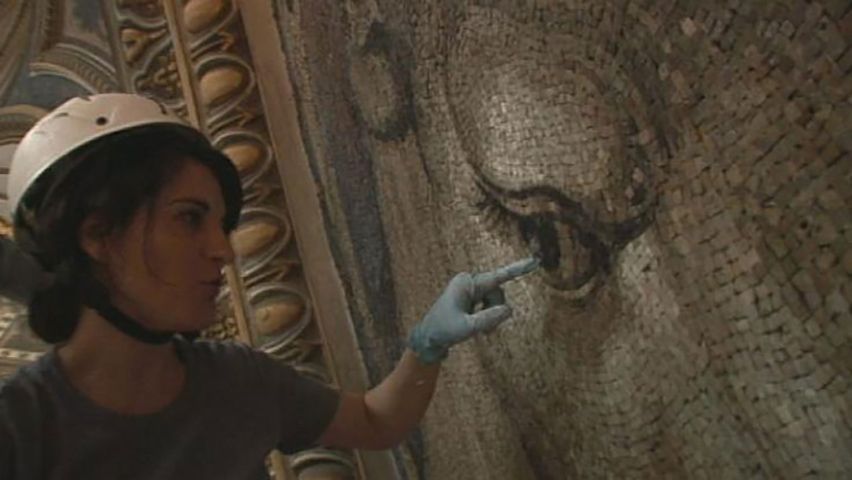
Art conservation and restoration
Learn about the restoration of tiles in St. Peter's Basilica, Vatican City.
In the field of art conservation and technical analysis, non-destructive imaging techniques are essential for identifying forgeries by revealing information hidden beneath the surface of an object.1
- Ultraviolet (UV) rays: These are used to detect additions or alterations to a painting. Because varnish and various paint layers fluoresce in different colors, UV light can highlight areas that have been retouched or modified. In sculpture, UV light helps distinguish between old marble, which fluoresces a yellow-greenish color, and modern pieces or recently recut surfaces, which appear bright violet.1
- Infrared (IR) rays: These rays can penetrate thin layers of paint in an oil painting. This allows experts to view underdrawings, reveal earlier compositions hidden beneath the final image, or uncover signatures that were painted over to increase the work's perceived value.1
- X-rays: These are used to examine the internal structure of an object. Forgers often focus on the surface effect and neglect internal construction. For example, X-ray imaging can reveal modern machine-made nails inside a wooden sculpture that is purportedly from the 15th century, immediately exposing the piece as a fraud.1