
Britannica
Sources used in this answer
How can sulfur dioxide pollution damage lime-based wall paintings?
Created from Britannica articles
using AI.
AI can make mistakes, so verify using Britannica articles.
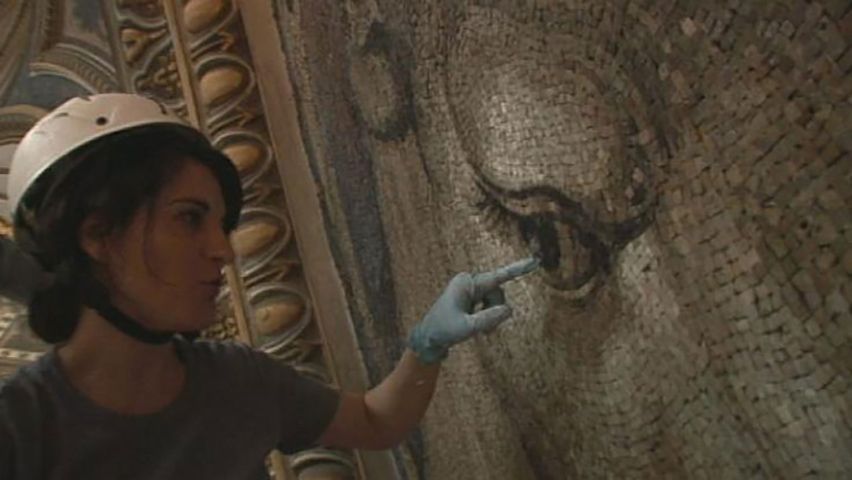
Art conservation and restoration
Learn about the restoration of tiles in St. Peter's Basilica, Vatican City.
Sulfur dioxide pollution poses a significant threat to lime-based wall paintings, particularly in the presence of moisture. When these pollutants react with moisture, they form sulfuric acid, which erodes the calcium carbonate component of the plaster.1
This chemical reaction converts the calcium carbonate into calcium sulfate, a process often referred to as sulfation. This transformation causes several types of damage:
- Structural Fracturing: The resulting sulfate crystals occupy nearly twice the volume of the original carbonate, creating internal pressure within the pores of the wall fabric that leads to fracturing.1
- Increased Moisture Absorption: The newly formed sulfate has a higher capacity to absorb moisture, which perpetuates and worsens the cycle of wet-dry decay.1
- Surface Discoloration: Beyond chemical erosion, polluted environments can deposit sooty, blackened particulates on the surface and discolor specific pigments, such as red or white lead, azurite, and malachite.1