
Britannica
Sources used in this answer
How can rising damp damage a mural near ground level?
Created from Britannica articles
using AI.
AI can make mistakes, so verify using Britannica articles.
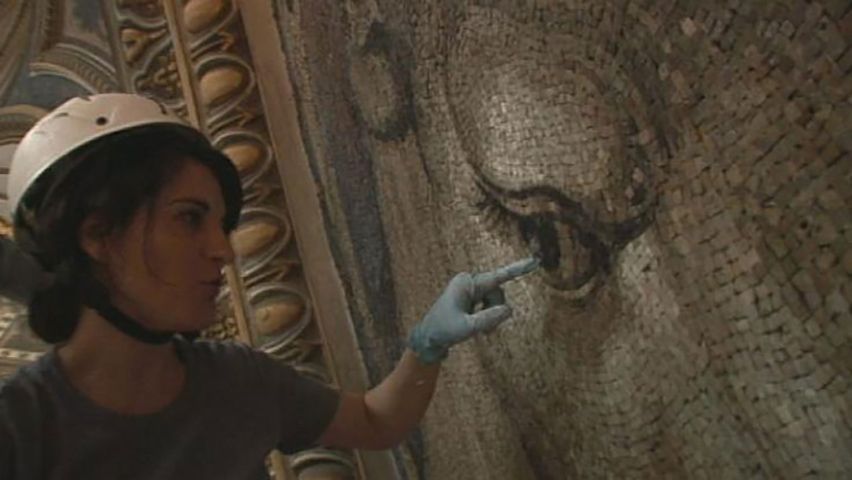
Art conservation and restoration
Learn about the restoration of tiles in St. Peter's Basilica, Vatican City.
Rising damp occurs when moisture from the ground travels upward through a wall's structure. This process poses a significant threat to murals located near ground level, as the excess moisture can lead to several forms of deterioration:
- Surface Damage: Moisture can cause blanching and drip staining on the painting's surface.1
- Efflorescence and Delamination: As moisture evaporates, it can leave behind crystallized salts. These salts may form within, below, or above the paint layers, causing the paint to delaminate or disintegrate. This process can also create a salty, obscuring "veil" over the image.1
- Secondary Growth: The damp environment created by rising moisture often encourages the growth of mold and mildew.1
To mitigate these issues, conservators may attempt to install a "damp course" of water-impermeable material beneath the mural or improve exterior drainage to reduce the total amount of moisture reaching the wall. It is critical that conservators avoid sealing the surface with water-impermeable materials like wax or resin, as this prevents moisture from evaporating freely and can force the damp to move laterally, expanding the area of damage.1