
Britannica
Sources used in this answer
Why do different cricket species have different songs?
Created from Britannica articles
using AI.
AI can make mistakes, so verify using Britannica articles.
Orthoptera
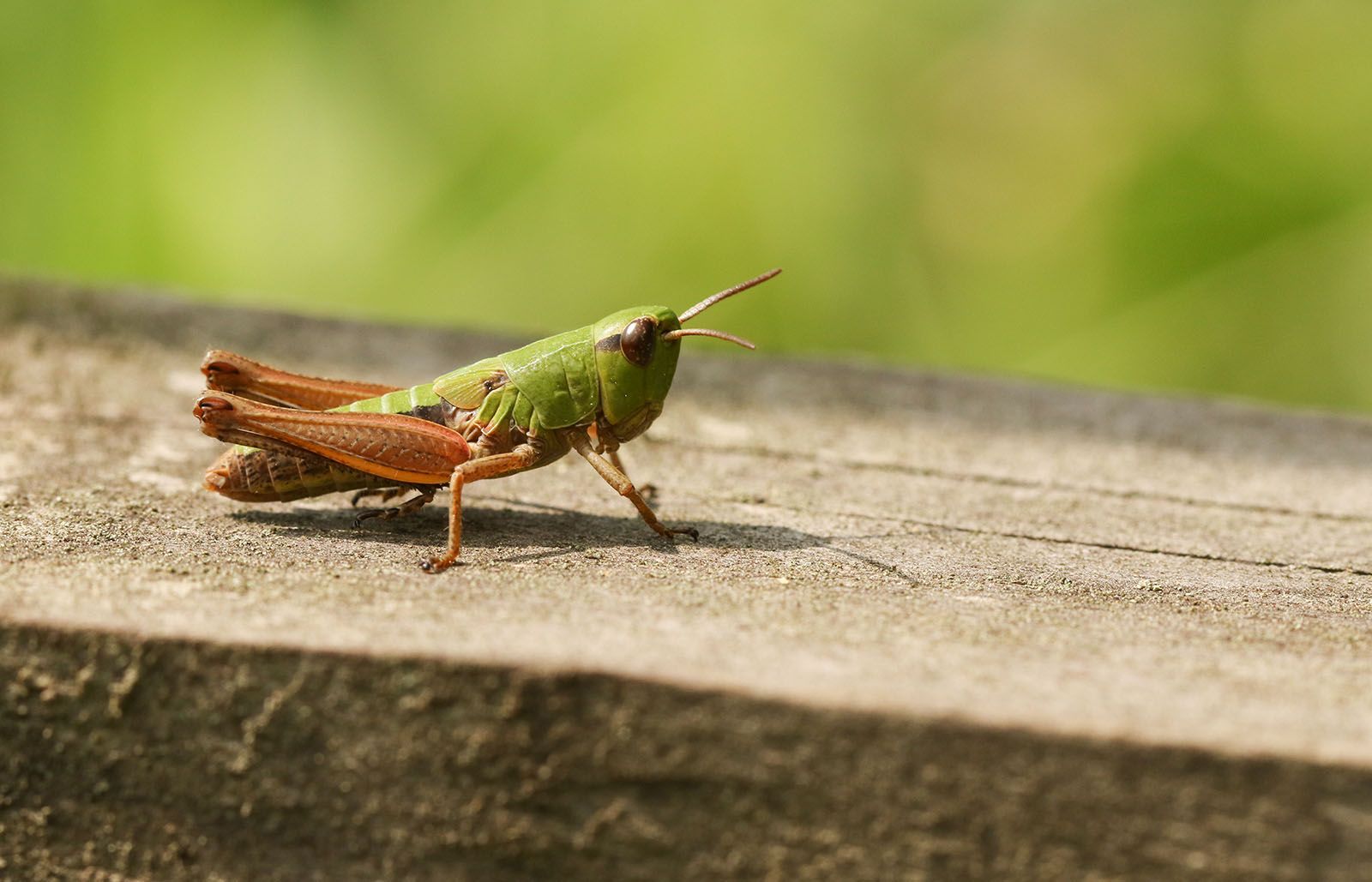
A colorful meadow grasshopper (Chorthippus parallelus) on a wooden fence.
Different cricket species have distinct songs primarily because these signals are highly species-specific, having evolved to align with the sensory receptors of females within their own species. This specificity helps ensure successful mate attraction while avoiding the costs associated with hybridization.12
The variation in these songs is driven by several factors:
- Physical Mechanisms: Crickets produce sound through stridulation, which involves rubbing a scraper on one forewing against a row of teeth on the other. The frequency of the resulting chirp is determined by the number of teeth struck per second, which varies significantly between species—ranging from 1,500 cycles per second in the largest species to nearly 10,000 in the smallest.34
- Evolutionary Divergence: As populations become physically separated, their courtship behaviors can diverge. Over generations, these differences in signaling and female preference can become so pronounced that they lead to the formation of separate species.5
- Sensory Bias: Signals often evolve to exploit the preexisting sensory biases of females. Once a preference for a specific trait is established in a population, it can drive the rapid evolution of that signal.15