
What is the cephalothorax of a horseshoe crab?
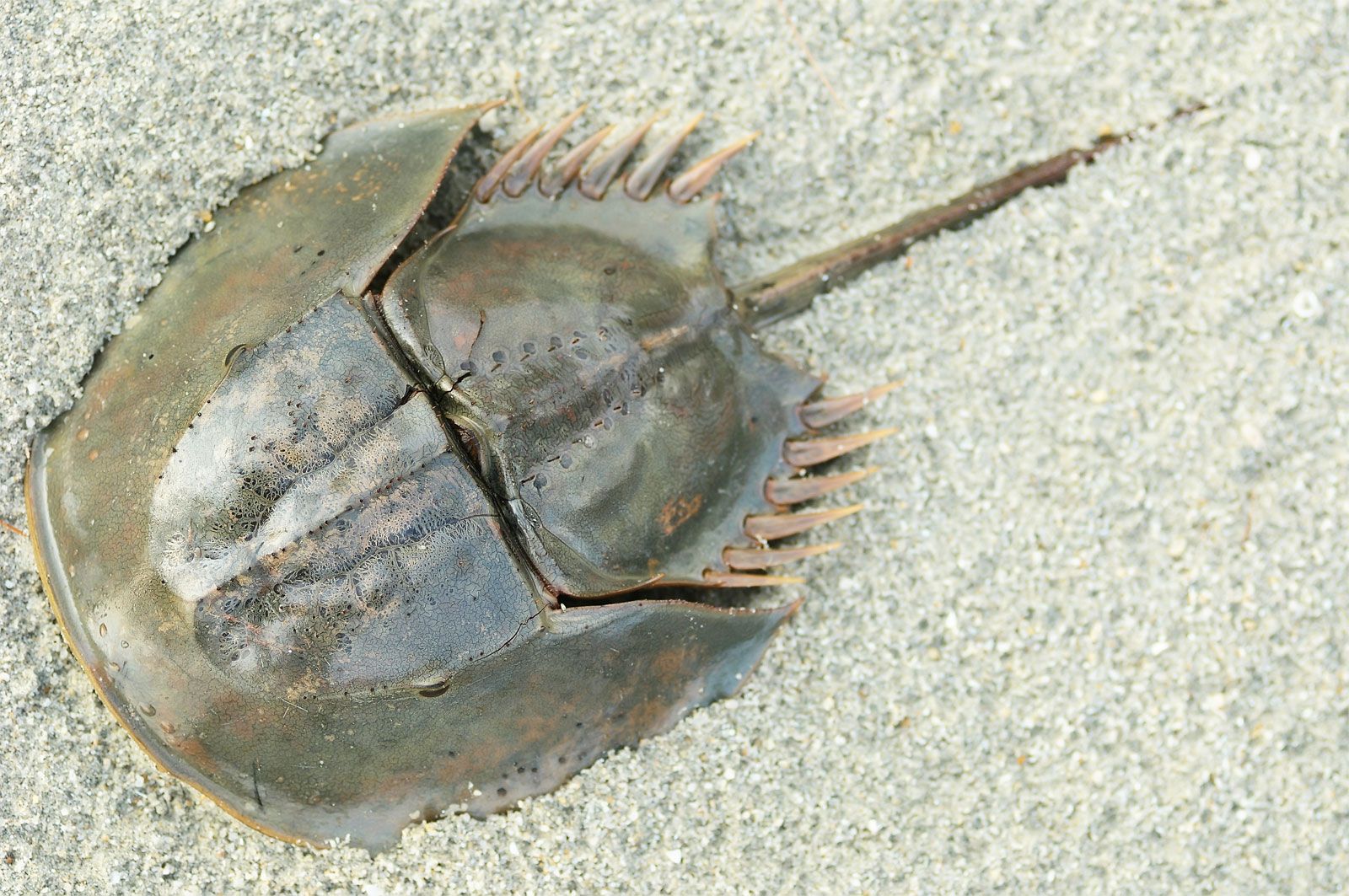
The cephalothorax of a horseshoe crab is the broad, horseshoe-shaped front section of its three-part body. As a member of the subphylum Chelicerata, the horseshoe crab’s body is divided into this cephalothorax (also known as the prosoma) and a smaller, segmented abdomen, followed by a long tail-spine called the telson.12
The cephalothorax features a smoothly arched upper surface covered by a dorsal carapace, which houses a pair of lateral compound eyes and a smaller pair of median eyes sensitive to ultraviolet light. On the underside, the cephalothorax bears six pairs of appendages:31
* The first pair, known as chelicerae, are used for seizing prey.1
* The remaining five pairs are used for both walking and feeding, with spiny projections at their bases that tear food and move it toward the mouth.1
During the molting process, the cuticle of the cephalothorax splits along the margin to allow the animal to grow.1