
Britannica
Sources used in this answer
What are tegmina on grasshoppers, crickets, and katydids?
Created from Britannica articles
using AI.
AI can make mistakes, so verify using Britannica articles.
Orthoptera
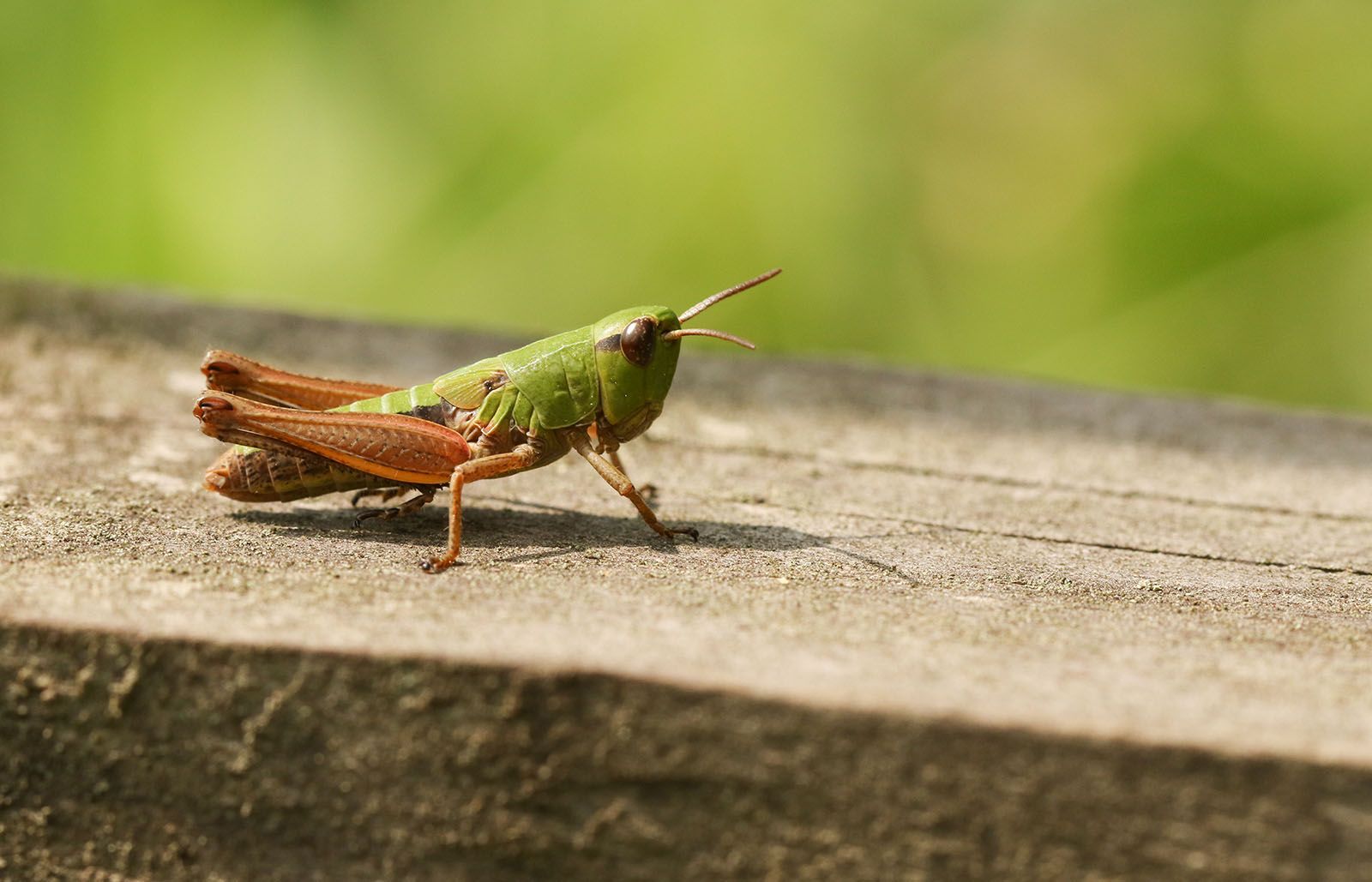
A colorful meadow grasshopper (Chorthippus parallelus) on a wooden fence.
In the insect order Orthoptera, tegmina (singular: tegmen) refer to the two forewings of the insect.12
These structures are characterized by the following features:
- Consistency: They are typically hardened and have a leathery texture, serving as a protective covering for the insect's body and the more delicate hindwings.12
- Appearance: They are generally long, narrow, and many-veined.1
- Function: Beyond protection, tegmina play a vital role in sound production for many species. In groups such as crickets and katydids, males produce species-specific songs through a process called stridulation, which involves rubbing their forewings—often one of which is ridged—together.34
- Resting Position: When the insect is at rest, the tegmina are folded over the back, covering the broader, membranous hindwings that are tucked underneath in a fanlike fashion.12