
How is chimpanzee play panting similar to human laughter?
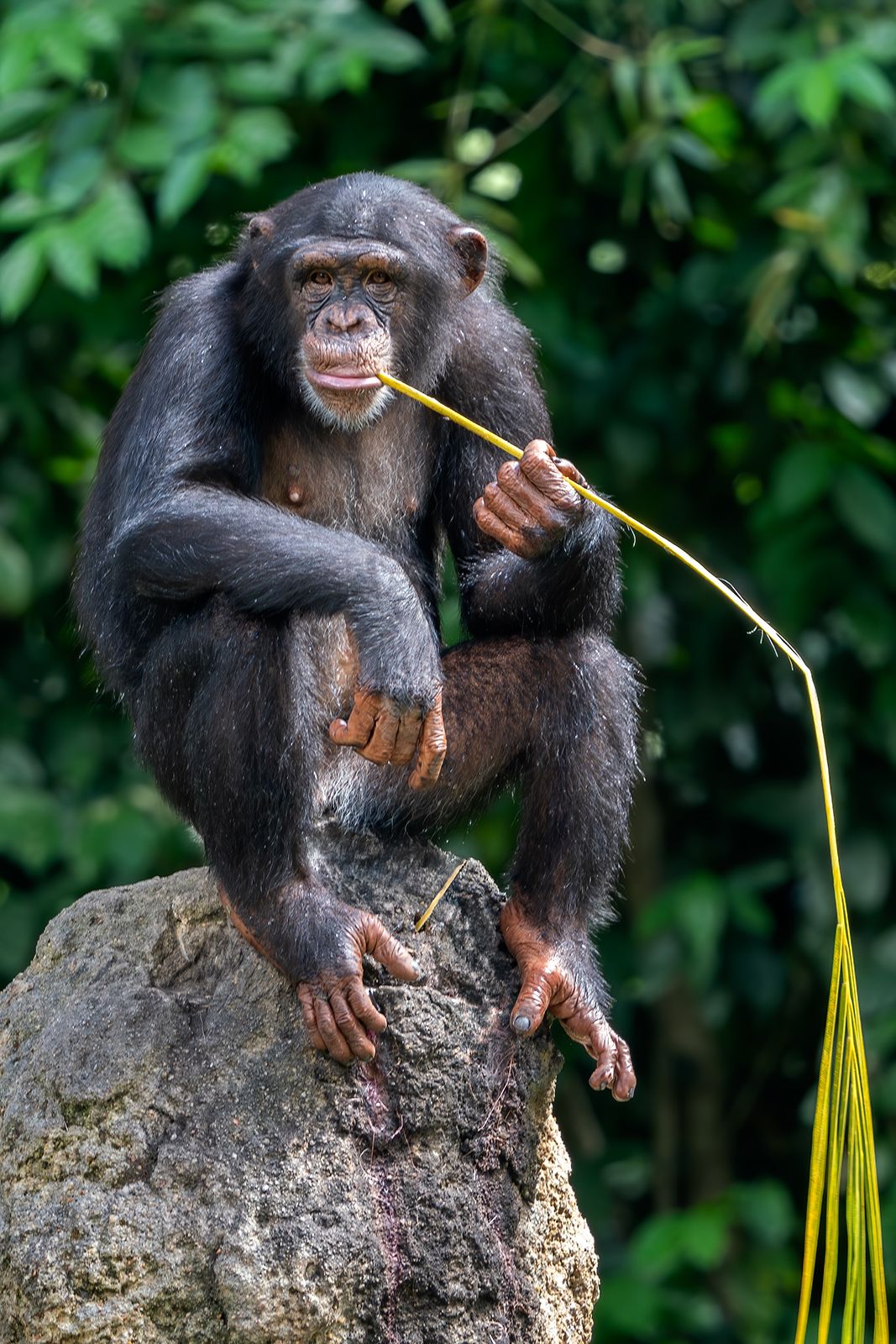
Chimpanzee "play panting" is considered a behavioral parallel to human laughter. While human laughter and chimpanzee vocalizations are distinct, researchers observe similarities in how these expressions function during social interactions.1
In chimpanzees, play panting is a specific vocalization used during play, serving as a signal that helps maintain social bonds and indicates that aggressive-looking behaviors—such as wrestling or chasing—are intended as play rather than actual conflict. Similarly, human laughter often functions as a social signal that can diffuse tension, signal playfulness, or reinforce group cohesion. Both behaviors involve rhythmic, repetitive vocal patterns that emerge in social contexts to communicate emotional states and manage social dynamics.123
It is important to note that while these behaviors share functional similarities in social communication, they are not identical. Chimpanzee play panting is specifically tied to their physical play activities, whereas human laughter has evolved into a complex social tool capable of expressing a wide range of emotions, including amusement, relief, and even social critique.123