
How does molting allow horseshoe crabs to grow?
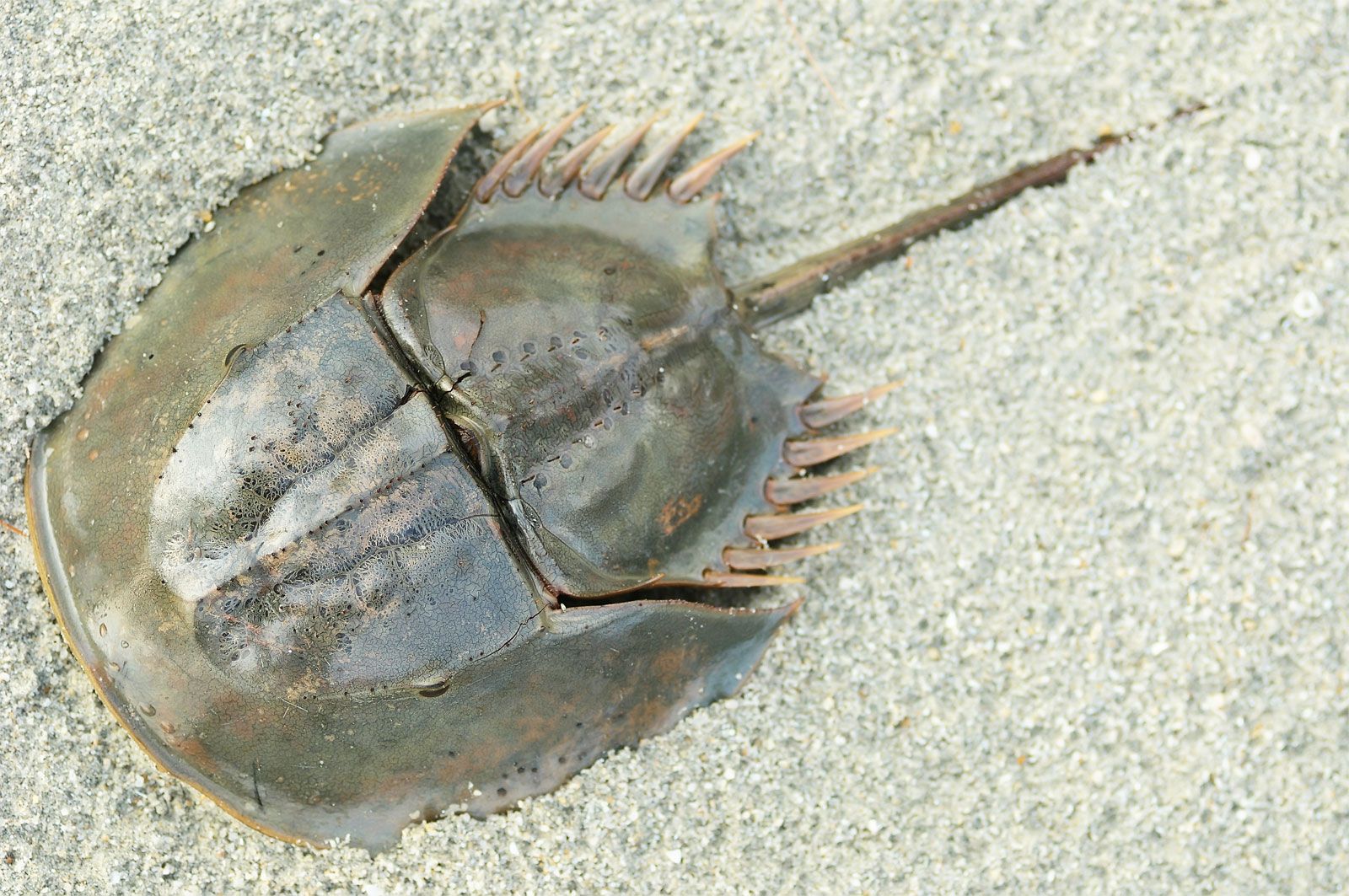
Horseshoe crabs, like other arthropods, are encased in a rigid, nonliving exoskeleton that prevents them from growing continuously. To overcome this limitation, they undergo a process called molting, or ecdysis, which allows for periodic increases in size.123
During this process, the horseshoe crab’s underlying cells release enzymes that digest the base of the old exoskeleton while simultaneously secreting a new, larger, and initially soft cuticle beneath it. When the animal is ready to molt, the old shell splits along the margin of the cephalothorax, allowing the crab to pull itself out of the old covering.21
Immediately following this shedding, the horseshoe crab expands its body—often by taking in water—to stretch the new, flexible exoskeleton before it hardens. This cycle enables the animal to achieve significant growth, with length increasing by approximately 25 percent after each molt. Horseshoe crabs continue this process throughout their development, reaching sexual maturity after about 16 molts.12