
Britannica
Sources used in this answer
How do tympanic organs help Orthoptera detect sound?
Created from Britannica articles
using AI.
AI can make mistakes, so verify using Britannica articles.
Orthoptera
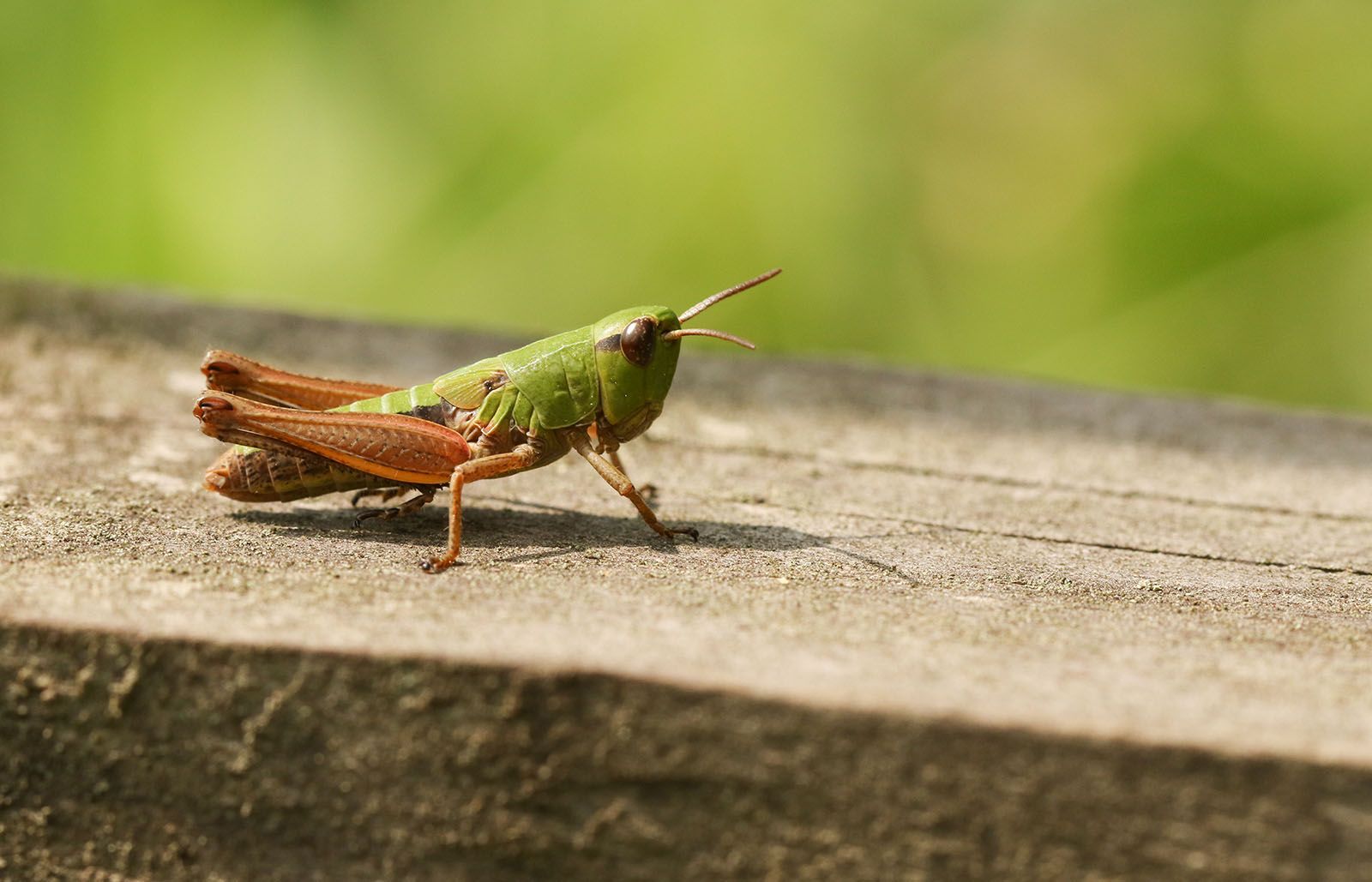
A colorful meadow grasshopper (Chorthippus parallelus) on a wooden fence.
Tympanic organs function as pressure-sensitive ears that allow Orthoptera to detect sound waves. These organs consist of a thin, chitinous tympanic membrane that vibrates in response to alternating sound pressures.12
The mechanism works as follows:
- Vibration: The membrane, which is often backed by an air sac to remain free to move, oscillates when hit by sound waves.12
- Sensory Reception: Attached to the inner surface of this membrane are specialized sensory cells called scolophores.12
- Signal Transmission: As the membrane moves, these scolophores are stimulated, triggering auditory nerve fibers to transmit impulses to the central nervous system.12
In grasshoppers, these organs are typically located on the sides of the abdomen, while in most crickets and katydids, they are found on the front tibiae. While these tympanic organs are the most well-known auditory structures in the group, some orthopterans rely on other mechanisms, such as sensory hairs or Johnston’s organ, to perceive sound.2