
Britannica
Sources used in this answer
How do the chewing mouthparts of Orthoptera help them feed?
Created from Britannica articles
using AI.
AI can make mistakes, so verify using Britannica articles.
Orthoptera
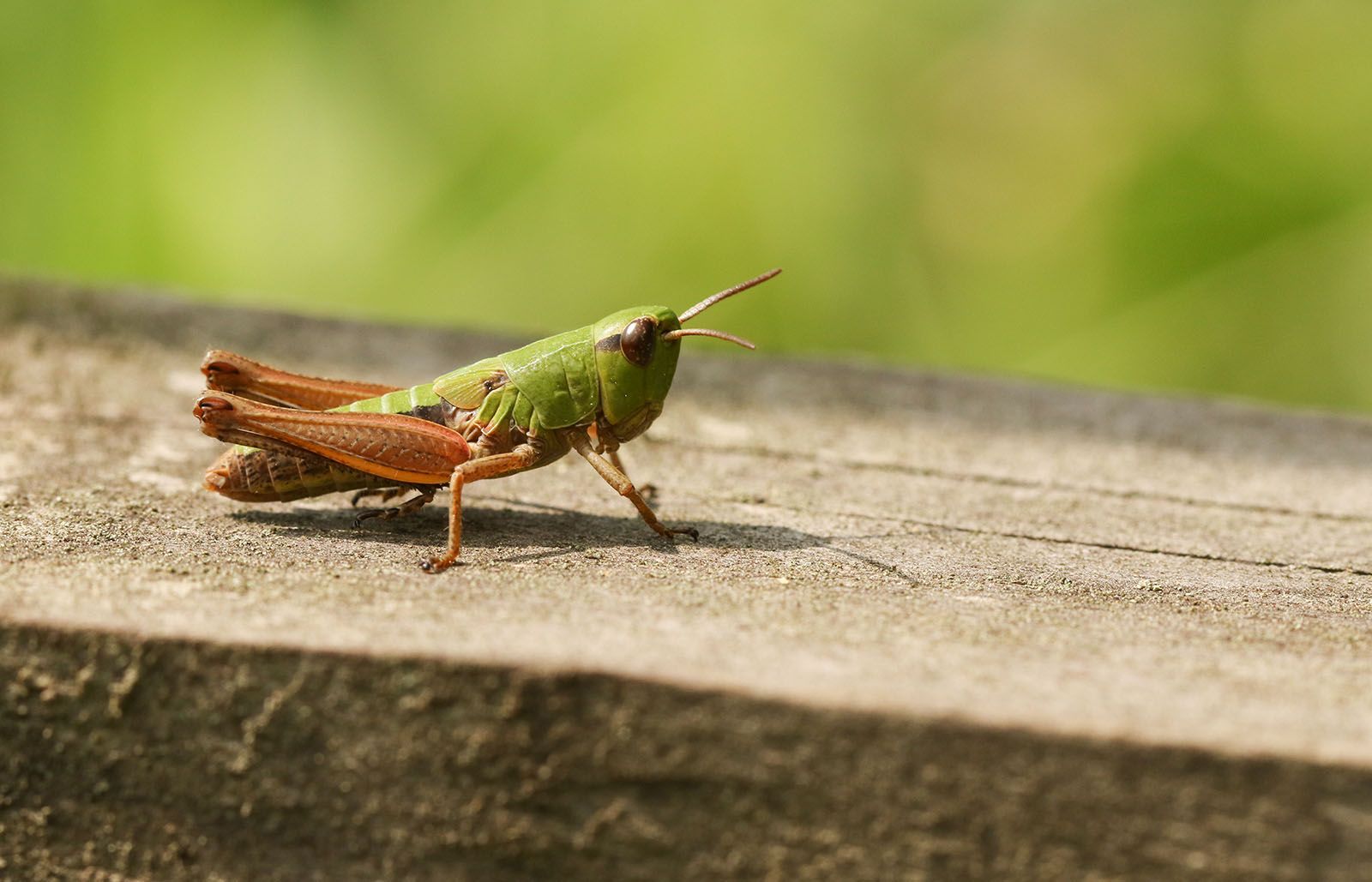
A colorful meadow grasshopper (Chorthippus parallelus) on a wooden fence.
Orthopterans, which include grasshoppers, crickets, and katydids, possess mandibulate mouthparts specifically adapted for chewing. These structures allow most members of the order to feed primarily on plant materials, such as leaves, flowers, and seeds.123
The chewing mechanism is facilitated by several specialized components located on the head:4
- Mandibles: A pair of hard, toothed structures that serve as the primary tools for biting and grinding food.4
- Maxillae: A pair of structures located behind the mandibles, each featuring a bladelike lacinia and a hoodlike galea, which help manipulate and process food.4
- Labium: Formed by the partial fusion of the second maxillae, this structure acts as a lower lip to help contain food within the mouth.4
- Hypopharynx: A median, tonguelike structure that arises from the floor of the mouth to assist in the feeding process.4
By using these components in opposition, orthopterans can effectively break down tough plant tissues to consume them. While primarily herbivorous, some species also use these same mouthparts to capture and devour other insects.453