
Britannica
Sources used in this answer
How do locusts differ from ordinary short-horned grasshoppers?
Created from Britannica articles
using AI.
AI can make mistakes, so verify using Britannica articles.
Orthoptera
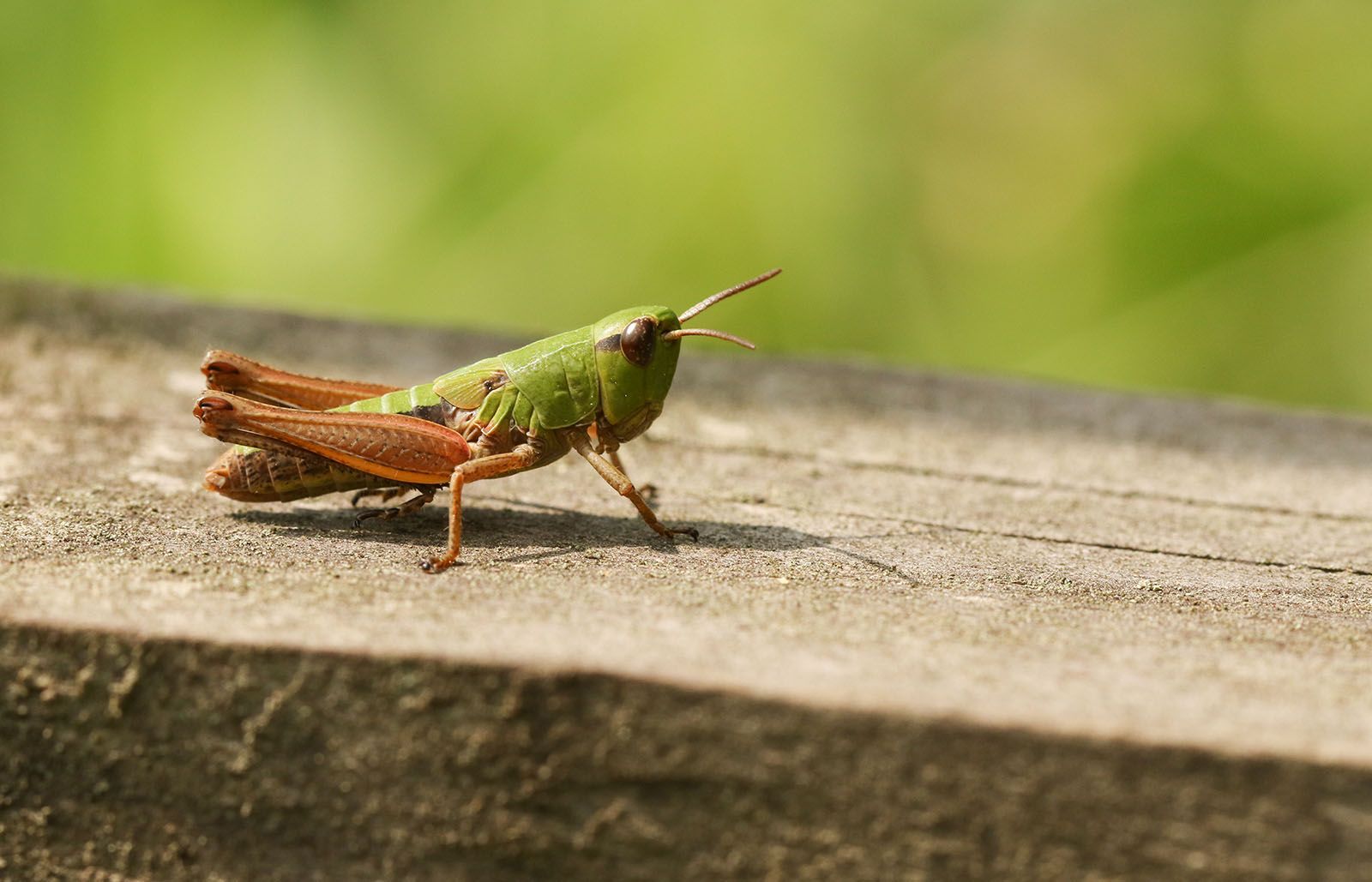
A colorful meadow grasshopper (Chorthippus parallelus) on a wooden fence.
Locusts are not a separate biological family from ordinary short-horned grasshoppers; rather, the term "locust" refers to specific species within the family Acrididae that exhibit a unique phenomenon known as phase polyphenism.12
The primary difference lies in their behavior and physiology:
- Phase Theory: Unlike ordinary grasshoppers, locusts possess the ability to exist in two distinct phases: a solitary phase and a gregarious phase.13
- Gregarious Behavior: When environmental conditions—such as crowding due to habitat loss—trigger hormonal changes, locusts shift from a solitary, sluggish state to a gregarious, migratory one. In this phase, they become highly active, nervous, and prone to gathering in massive, destructive swarms.13
- Physical Differences: Gregarious-phase locusts often exhibit different physical traits compared to their solitary counterparts, such as longer wings, broader shoulders, and distinct coloration patterns (often black and yellow or orange).13
While many short-horned grasshoppers are agricultural pests, only those capable of this dramatic physiological and behavioral transformation into migratory swarms are classified as locusts.132