
Britannica
Sources used in this answer
How do chimpanzee communities organize their groups?
Created from Britannica articles
using AI.
AI can make mistakes, so verify using Britannica articles.
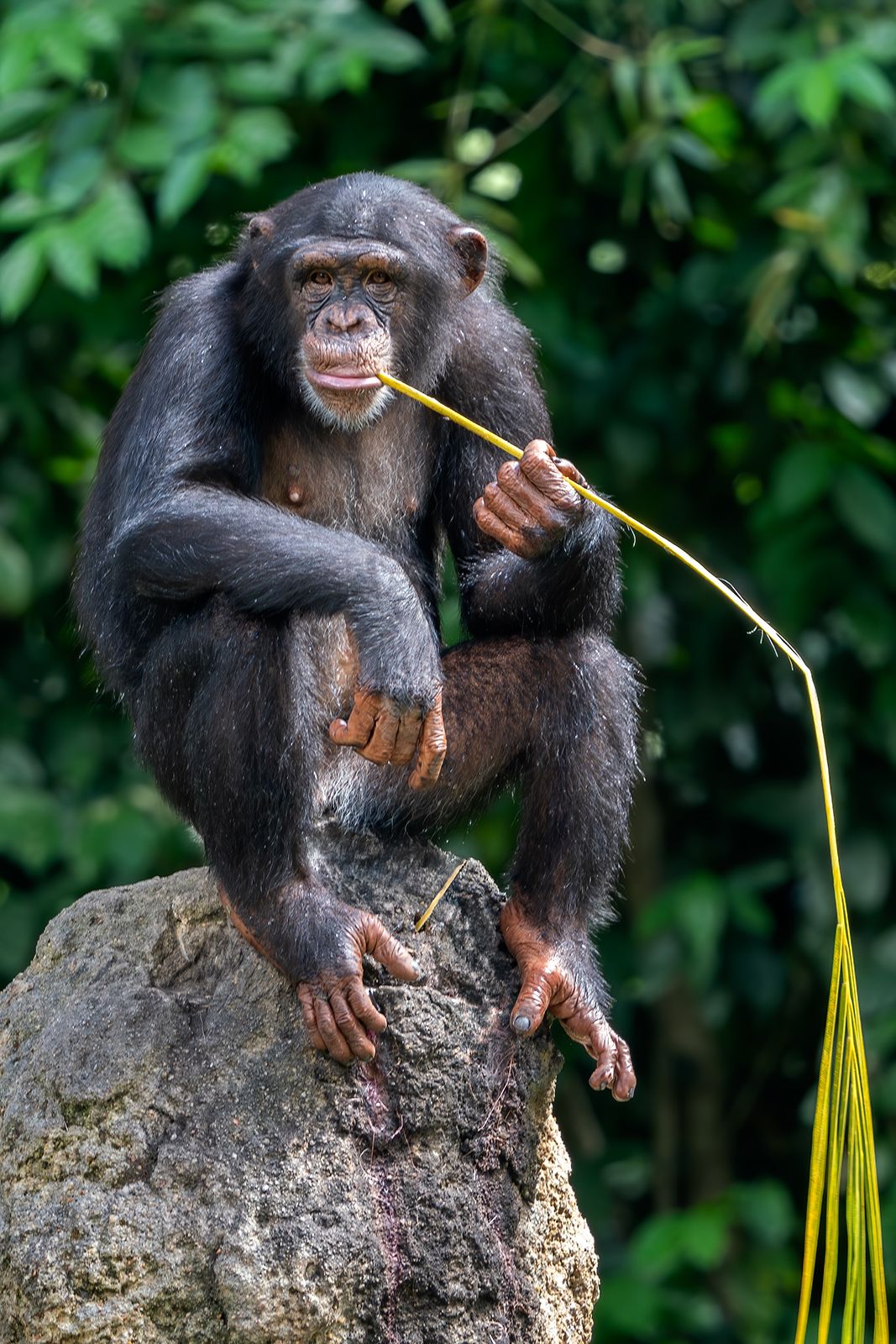
chimpanzee
The West African, or masked, chimpanzee (Pan troglodytes verus) is a critically endangered subspecies of chimpanzee.
Chimpanzees live in highly social, flexible groups known as communities or unit groups, which typically range from 20 to over 100 members. These communities are organized around associations between adult males within a specific home range.1
Key aspects of their social organization include:
- Fluid Subgroups: Communities divide into smaller, unstable groups called parties. Individuals join and leave these parties with complete freedom.1
- Dominance Hierarchy: A social dominance structure exists where adult males are generally dominant over females and adolescents. This hierarchy is fluid; alpha males can be challenged or expelled by coalitions of subordinate males.1
- Dispersal Patterns: Males typically remain in their birth community for life, while most females leave to join neighboring groups upon reaching maturity.1
- Social Strategies: Chimpanzees maintain complex relationships through reciprocal grooming, meat sharing, and the formation of coalitions and alliances.1
Relations between different communities are often hostile, characterized by boundary patrols and territorial aggression.1