
Britannica
Sources used in this answer
How do baby chimpanzees travel with their mothers as they grow?
Created from Britannica articles
using AI.
AI can make mistakes, so verify using Britannica articles.
chimpanzee
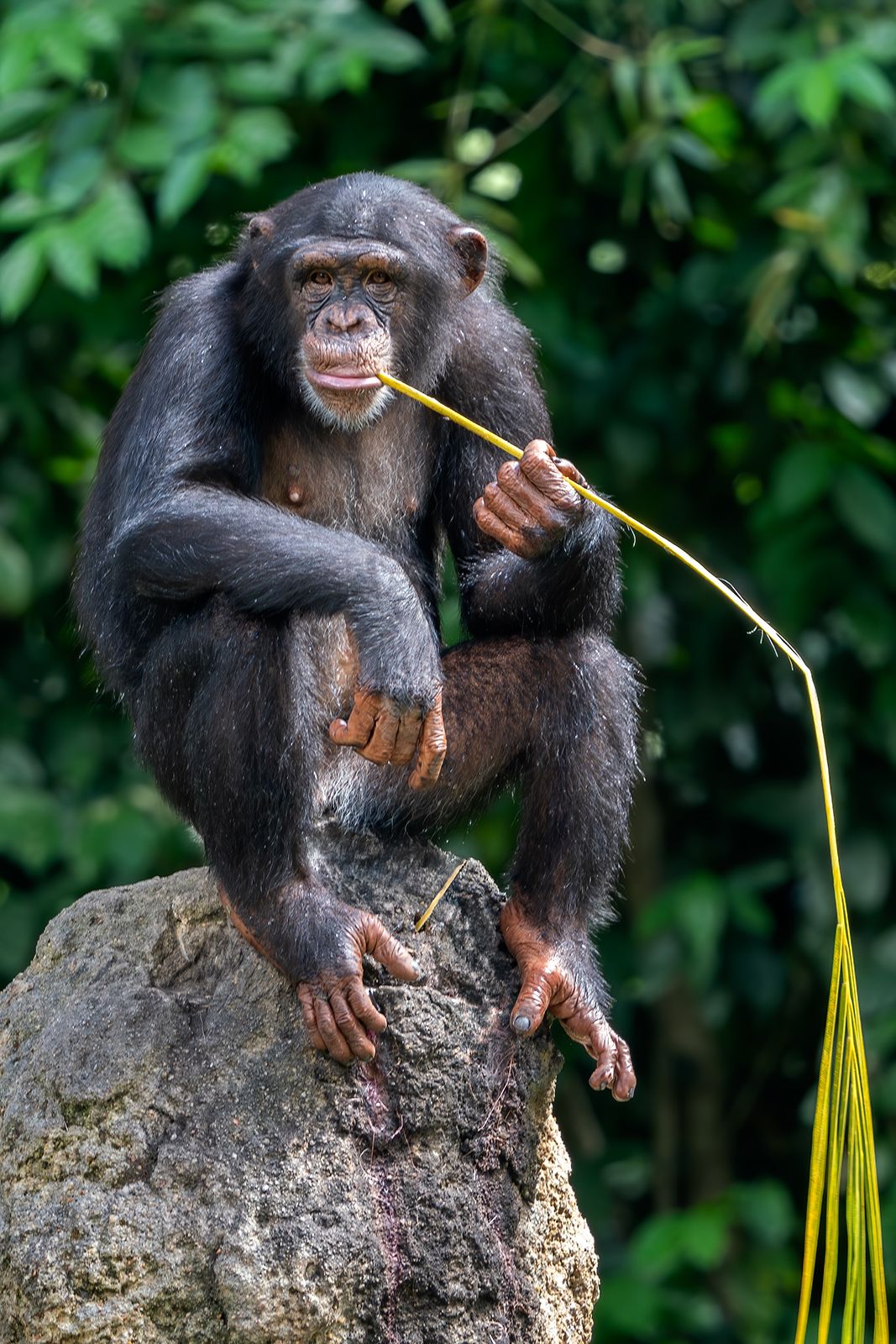
The West African, or masked, chimpanzee (Pan troglodytes verus) is a critically endangered subspecies of chimpanzee.
As baby chimpanzees grow, their method of traveling with their mothers changes to accommodate their increasing size and independence:
- Infancy: Newborn chimpanzees are nearly helpless and must cling to the fur on their mother’s belly as she moves. Unlike many other primates, chimpanzee mothers must actively support their newborns.12
- Developmental Transition: As the youngster matures, typically from about 6 months to 2 years of age, it transitions to riding on its mother’s back.1
This physical dependency is a critical aspect of chimpanzee life, as the survival of the infant depends on its ability to hold on tightly to the mother while she navigates her environment. While the physical phase of dependency eventually ends, chimpanzees maintain a long period of psychological maternal dependency, which can last for 7 to 8 years or even longer.2